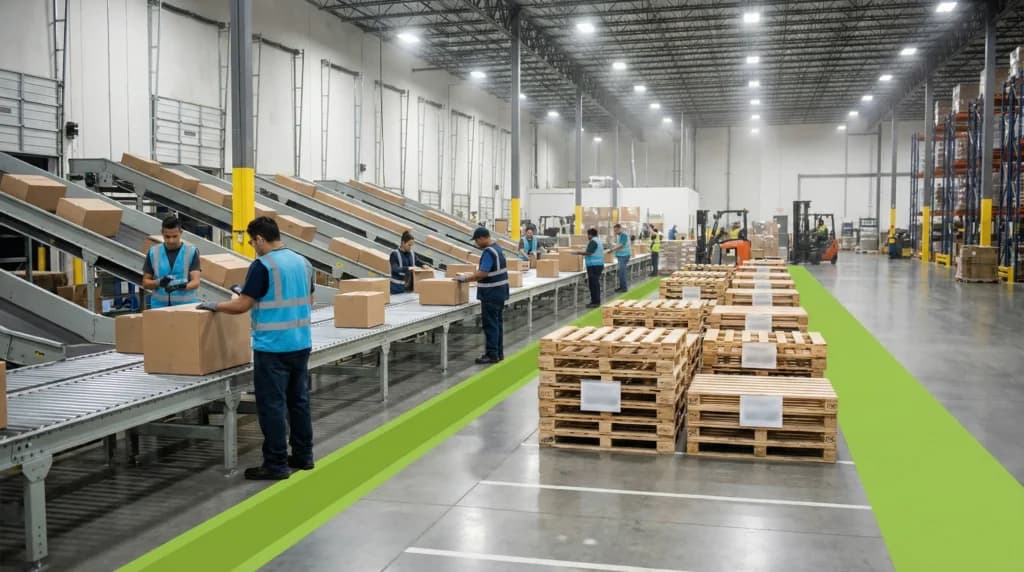
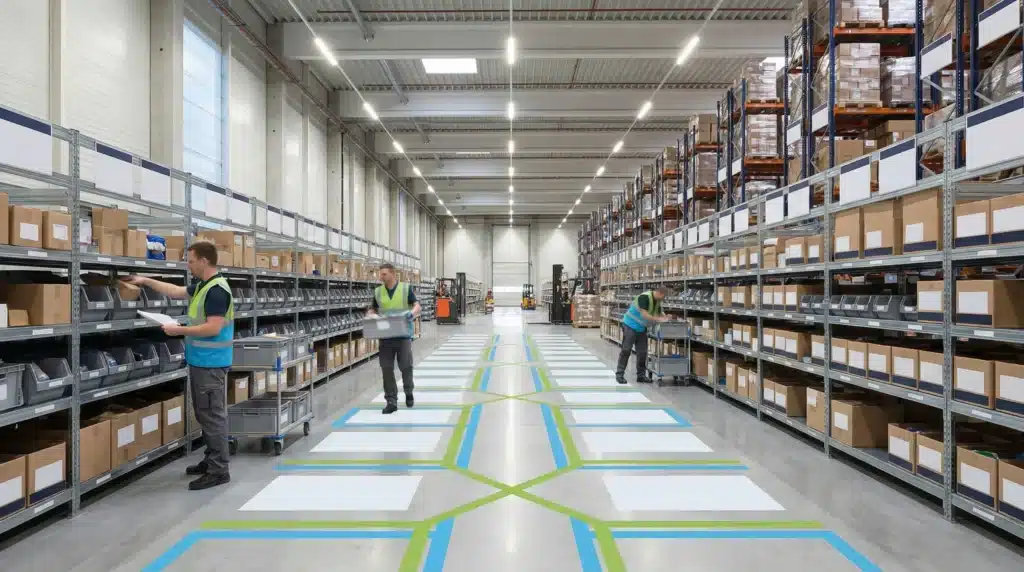
Imagine this: it is 8:45 p.m., the last outbound wave is still open, and a new client just emailed a spreadsheet of 1,200 SKUs with special labeling rules that start tomorrow. Your team is hustling, but the real bottleneck is not labor. It is visibility. In moments like this, 3pl logistics, 3pl WMS software pricing stop being buzzwords and become the difference between a controlled operation and a nightly fire drill.
That was the reality for a mid-sized 3PL we will call NorthRiver Fulfillment. They were winning business, but every new account meant a new set of spreadsheets, manual mappings, and frantic calls between customer service and the floor. Their leadership needed a system that could onboard clients quickly, integrate cleanly, and scale without rewriting processes every quarter.
3PL logistics today: why it matters and why it is getting harder
Third-party logistics has moved from a cost-saving option to a strategic advantage. Brands want faster delivery promises, more channels, and real-time answers. In 3pl logistics, the provider that can deliver accurate inventory, clean billing, and predictable SLAs wins renewals and referrals.
The rise of 3PL
E-commerce growth, marketplace expansion, and demand volatility have pushed brands to outsource fulfillment. Instead of building new distribution centers, they partner with 3PLs that already have labor, space, and carrier relationships. Industry coverage from Supply Chain Dive reporting on logistics and fulfillment trends regularly highlights how quickly expectations are changing.
Why 3PL matters to your clients
Clients measure outcomes, not effort. They want fewer stockouts, faster turnaround, and fewer customer complaints. When a 3PL can prove performance with data, the relationship shifts from vendor to long-term partner. That is why 3pl wms software is now central to service design, not just a back-office tool.
Where 3PL logistics breaks down: challenges that quietly drain margin
Picture a warehouse where every client has different carton rules, different order cutoffs, and different compliance labels. The floor can still move fast, but the operation becomes fragile. One missed step creates chargebacks, reships, and customer escalations that eat margin.
Common challenges in 3PL operations
- Multi-client complexity with unique workflows, packaging, and billing requirements.
- Integration sprawl across ERPs, shopping carts, EDI, marketplaces, and carrier systems.
- Inventory trust issues when cycle counts do not match system numbers or when quarantined stock is not visible.
- Labor variability driven by seasonality, promotions, and sudden inbound surges.
- Reporting pressure to prove SLA performance, accuracy, and cost-to-serve by client.
Opportunities hiding inside the chaos
NorthRiver Fulfillment discovered that their biggest wins were not heroic overtime shifts. Their wins came from standardizing processes and using data to prevent exceptions. With the right 3pl logistics technology stack, the same building can support more clients without multiplying overhead.
Leaders who treat exceptions as signals can grow faster. When you can see where picks slow down, why returns spike, or which SKUs trigger mispacks, you can redesign workflows and protect profitability. Publications like Logistics Management insights on warehouse operations consistently reinforce that process plus technology is the path to scalable fulfillment.
Choosing 3PL WMS software: features that actually move the needle
Not every warehouse system is built for a multi-client environment. A true 3PL platform must support different rules by customer, automate billing triggers, and connect to the outside world without months of custom code. The goal is simple: make complexity manageable, then make it repeatable.
Essential 3PL WMS software capabilities
- Multi-tenant configuration so each client can have unique workflows, labels, and documents without breaking shared operations.
- Real-time inventory visibility across locations, holds, lots, serials, and status changes.
- Order orchestration that supports waves, batching, priority rules, and channel-specific requirements.
- Inbound control for ASNs, appointment scheduling support, receiving verification, and putaway logic.
- Value-added services like kitting, relabeling, and light assembly with trackable labor and materials.
- Billing support through event capture and configurable charge codes to reduce revenue leakage.
- Role-based access so client users can see their data without exposing other accounts.
- Audit-ready reporting for accuracy, productivity, and SLA compliance.
Benefits for 3PL companies, told through a day on the floor
After NorthRiver implemented 3pl WMS software solutions, the morning standup changed. Instead of debating whose spreadsheet was correct, supervisors looked at live dashboards. Receivers could see what was expected before trucks arrived. Pickers got directed work that reduced travel and prevented wrong-item picks. Client services could answer inventory questions in minutes, not hours.
The operational benefits were measurable:
- Higher accuracy through scanning, directed putaway, and system-enforced checks.
- Faster onboarding because client rules were configured, not hard-coded.
- More predictable labor using workload visibility and better wave planning.
- Stronger client trust because reporting matched reality.

SphereWMS for 3PL logistics: integration-first, future-ready by design
In 3PL environments, software only succeeds when it connects. A WMS that cannot integrate cleanly forces teams into manual workarounds that quietly reintroduce errors. SphereWMS is built to support the integration demands of modern 3pl logistics while staying flexible for the next wave of client requirements.
Unique integration capabilities that reduce onboarding time
SphereWMS is designed to plug into the systems your clients already use. That matters when a new brand needs EDI for retailers, API connections for marketplaces, and carrier rate shopping, all while expecting go-live in weeks.
- ERP and order platform connectivity to keep orders, inventory, and status updates synchronized.
- EDI readiness for trading partner requirements and compliance workflows.
- Carrier and shipping integrations to streamline label generation, tracking, and exception handling.
- Data consistency through structured mappings that reduce duplicates and mismatched SKUs.
For NorthRiver, integration was not a side project. It was the core project. Once their inbound orders and outbound confirmations flowed automatically, client service stopped acting as a relay team between systems. That freed time for higher-value work like exception management and proactive client communication.
Future-ready technology for the next client you have not met yet
3PLs rarely fail because they cannot pick fast enough. They struggle when a new client introduces new constraints: serialization, lot controls, temperature requirements, or strict retailer labeling. SphereWMS supports growth by keeping configuration flexible and workflows adaptable, so you can add services without rebuilding your operation.
That future-ready approach helps 3PL leaders standardize what should be standard and customize only what creates client value. It is the practical path to scaling 3pl logistics, 3pl wms software across multiple accounts without multiplying complexity.
Case studies: what successful SphereWMS implementations look like in real warehouses
Stories are useful because they show tradeoffs. These examples illustrate how 3PLs use SphereWMS to solve common pain points: onboarding speed, inventory accuracy, and multi-client reporting.
Case study 1: onboarding growth without adding chaos
NorthRiver Fulfillment signed three new clients in one quarter, including a subscription brand with strict cutoffs and custom inserts. Before SphereWMS, every new account meant new spreadsheets, manual pick lists, and a fragile training process.
After implementing SphereWMS, they standardized receiving and picking while configuring client-specific rules where needed. They reported:
- 30% increase in operational efficiency by reducing manual touches and rework.
- 20% reduction in order processing time through directed workflows and better wave planning.
- Fewer onboarding surprises because integrations and rules were validated before go-live.
The biggest change was cultural. Supervisors stopped relying on tribal knowledge. New hires could follow system-guided steps, and exceptions were captured consistently.
Case study 2: inventory accuracy that clients could finally trust
Another 3PL, Horizon MultiClient Logistics, struggled with inventory disputes. Clients would question available-to-promise numbers, and the warehouse would scramble to recount. The issue was not effort. It was inconsistent status control and delayed updates between systems.
With SphereWMS, Horizon implemented tighter location control, scan-driven moves, and clearer inventory statuses for holds and QA. The results were straightforward:
- Improved inventory accuracy through real-time updates and disciplined transaction tracking.
- Better client reporting with consistent definitions for on-hand, allocated, and available inventory.
- Higher customer satisfaction because orders shipped correctly and questions were answered quickly.
For Horizon, 3pl wms software became a trust engine. Once clients believed the numbers, conversations shifted from blame to planning.

What is next for 3PL logistics and WMS technology
Picture a warehouse where exceptions are predicted before they happen, labor is allocated dynamically, and clients can self-serve answers without opening tickets. That is where the market is heading, and it is why selecting 3pl logistics, 3pl wms software with a future-ready foundation matters.
Emerging technologies shaping execution
- AI-assisted decisioning to improve slotting, wave planning, and exception prioritization.
- IoT and sensor data for condition monitoring, asset tracking, and real-time location insights.
- Automation and robotics integrated into WMS workflows to reduce travel and stabilize throughput.
- Stronger data interoperability as clients demand faster integrations and cleaner event data.
Predicted industry shifts for 3PL leaders
Clients will continue to push for faster delivery promises, more transparency, and more flexible service menus. At the same time, labor constraints and real estate costs will keep pressure on margins. The 3PLs that win will standardize operations, instrument every process step, and use 3pl logistics data to price services accurately.
That means your WMS cannot be a static system. It must support new workflows, new integrations, and new reporting requirements without turning every change into a custom development project.
Conclusion: turn 3PL complexity into a repeatable advantage
The most successful 3PLs do not eliminate complexity. They control it. When your operation is built on accurate data, clean integrations, and configurable workflows, you can onboard faster, ship more accurately, and protect margin even as client demands evolve.
If you are evaluating 3pl wms software to strengthen your 3pl logistics operation, take the next step with SphereWMS:
- Schedule a demo to see SphereWMS in a 3PL workflow
- Learn more about SphereWMS WMS solutions built for multi-client operations
- Contact our team to discuss integrations, onboarding, and your roadmap
Frequently Asked Questions
What are the main benefits of using 3PL logistics?
3PL logistics offers strategic advantages by providing faster delivery promises, multiple channel integrations, and real-time inventory management. It allows businesses to outsource fulfillment, saving on costs and resources, while ensuring efficient operations. Providers like SphereWMS enhance these benefits with advanced software solutions.
How does 3PL WMS software improve warehouse operations?
3PL WMS software streamlines warehouse operations by automating workflows, improving inventory accuracy, and facilitating quick client onboarding. It helps manage multi-client complexity and integration sprawl effectively. SphereWMS is an example of software that offers these capabilities, ensuring smooth and scalable operations.
What challenges do 3PL logistics face today?
3PL logistics face challenges such as multi-client complexity, integration sprawl, and inventory trust issues. These can lead to operational inefficiencies and margin erosion. Using comprehensive systems like SphereWMS can mitigate these issues by providing visibility and control over logistics processes.
Why is 3PL WMS software crucial for client satisfaction?
3PL WMS software is crucial for client satisfaction as it ensures fewer stockouts, faster turnaround times, and reduced customer complaints. By providing accurate data and performance metrics, software like SphereWMS helps transform vendor relationships into long-term partnerships, enhancing client trust and retention.
How can 3PL logistics providers gain a competitive edge?
3PL logistics providers can gain a competitive edge by offering accurate inventory management, clean billing, and predictable SLAs. By leveraging 3PL WMS software like SphereWMS, providers can efficiently manage complex workflows and deliver superior client experiences, leading to renewals and referrals.