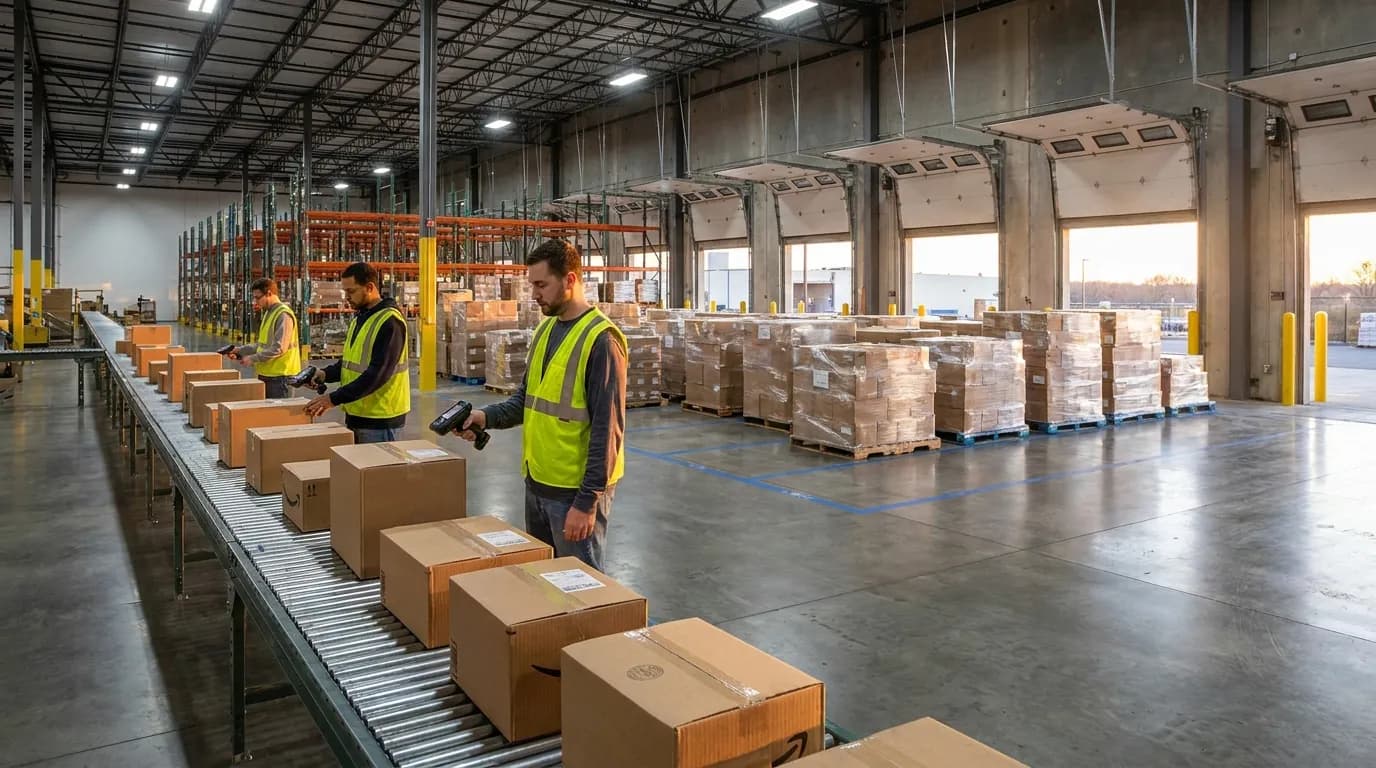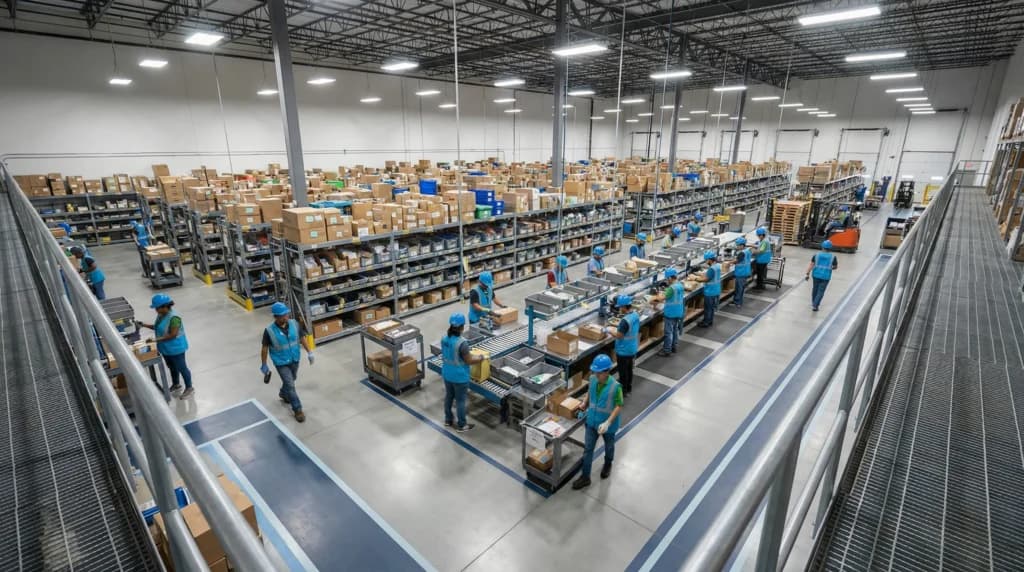
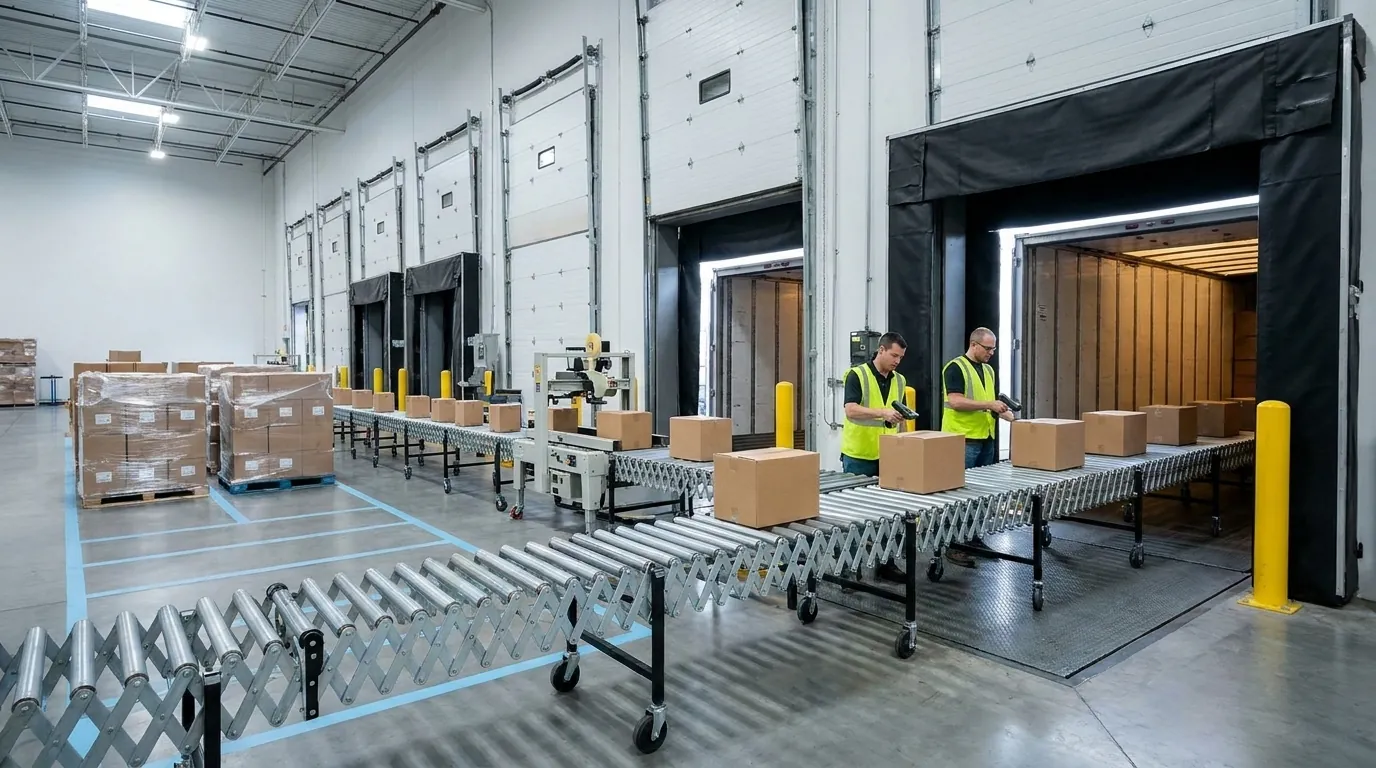
What Warehouse Packaging Actually Covers
Warehouse packaging is more than putting products in boxes. It covers every decision and physical step between the final pick and the moment a carrier takes the parcel. Each of those steps moves three numbers that operations leaders watch closely: packs per hour, shipping cost per order, and mis-ship rate.
Think of packaging as a chain. A weak link anywhere, whether a cramped station, the wrong carton, or a skipped verification scan, surfaces later as overtime, carrier surcharges, or returns. The subsections below split that chain into its core parts so you can spot where your own building loses time and money. For a look at the steps that come right before this stage, see our overview of picking and packing operations.
Pack Station Design and Workflow
A well-designed station keeps cartons, tape, void fill, scanners, and printers within arm's reach so packers rarely step away or stretch. Station count and layout should follow your order mix. Single-unit ecommerce orders favor fast, compact benches with a narrow carton selection, while multi-line B2B orders need room to stage several items, build mixed cartons, and insert paperwork.
Consider a hypothetical apparel shipper whose packers walk ten feet to a shared tape gun. Across a full shift, those small trips add up to real minutes per person. Before changing anything, record a baseline throughput figure for each station (orders packed per labor hour works well) so you can prove whether a redesign actually helped.
Carton, Material, and Void Fill Selection
Carton choice drives cube utilization and dimensional weight billing. An oversized box raises freight cost, consumes more corrugated, and needs extra padding to keep contents from shifting. Many parcel carriers bill on whichever is greater, actual weight or a size-based calculation, so empty space inside a box is something you pay to ship.
A curated carton suite sized to your real order profiles, rather than a catalog of every box a supplier sells, paired with clear padding rules for fragile or liquid items, cuts material waste and damage claims together. If breakage is a recurring problem, test procedures published by the International Safe Transit Association offer a structured way to evaluate how packages hold up in transit.
Pack-Out Verification, Labeling, and Shipping Handoff
Pack-out verification confirms every item and quantity is in the box, usually by scanning each unit against the order. An optional scale check compares actual weight with expected weight to catch missing or extra pieces. Next comes the shipping label, printed at the station or applied by a print-and-apply unit, followed by sortation or staging by carrier.
Skipping verification is one of the most common root causes of mis-ships, and every error costs a return label, a replacement shipment, and some customer goodwill. Our guide to the warehouse shipping process covers what happens after the parcel leaves the bench.
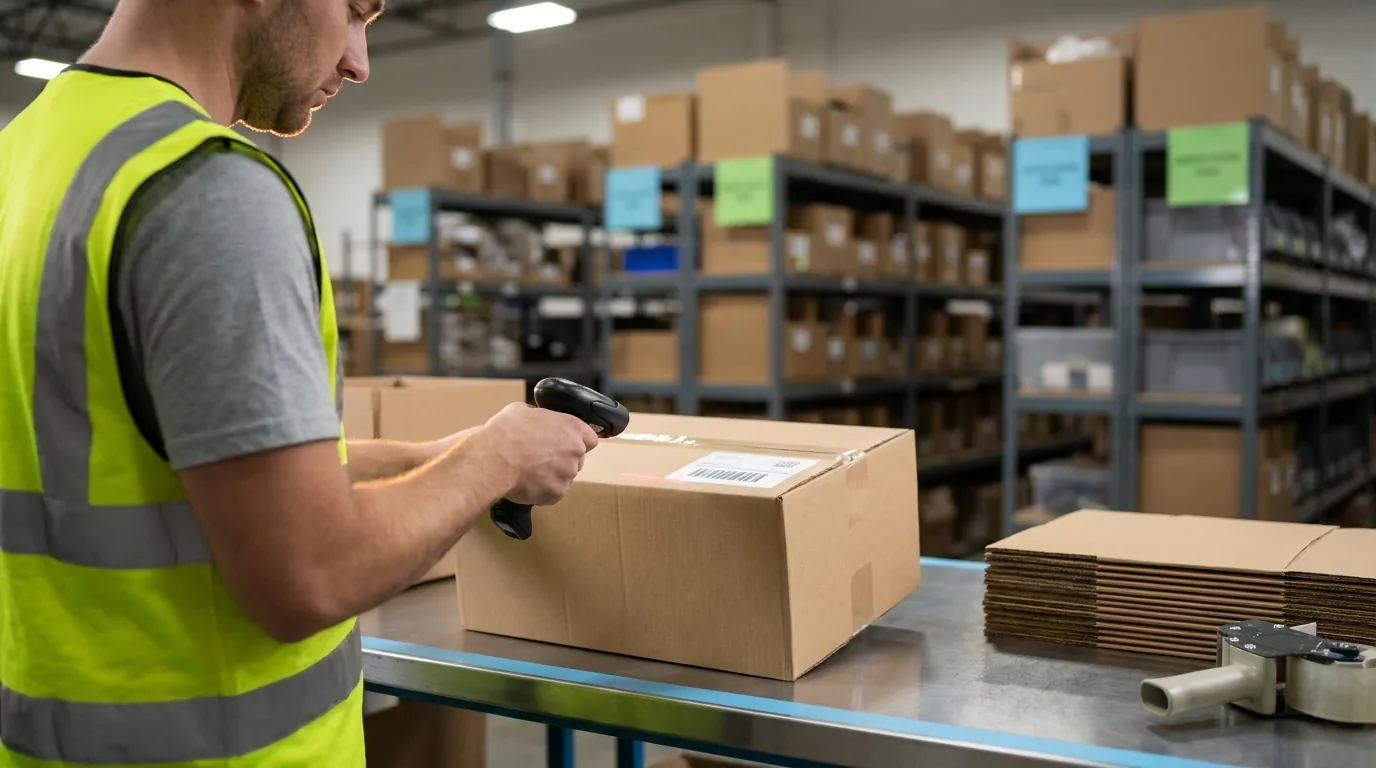
Types of Packaging Solutions Compared
Packing approaches fall into three broad tiers. None is universally best. The right fit depends on volume, SKU variety, the local labor market, and how well your systems can feed equipment accurate data. Many operations run a hybrid, sending high-volume uniform orders through automation while people handle exceptions and oversized items.
Manual Pack Stations
Manual stations offer low capital cost, maximum flexibility for odd shapes and kitting, and quick reconfiguration when the order mix shifts. The downsides are real, though. Throughput depends on labor, carton choice varies from one packer to the next, and error rates climb with fatigue and with seasonal temps who have had little training.
They fit best in lower-volume buildings, operations with highly variable SKUs, or sites with a stable, experienced crew. Adding system-recommended carton sizes and scan verification closes much of the gap with automation at a fraction of the cost, and sound workforce management keeps staffing matched to daily demand.
Semi-Automated Tools
This middle tier includes on-demand right-sizing machines that cut cartons to fit each order, auto-baggers for poly mailers, automatic tapers, void fill dispensers, and print-and-apply labelers. The appeal is targeted gains exactly where the bottleneck sits, with moderate investment.
The catch is that each tool needs integration and accurate dimensions to perform. A right-sizing machine fed bad measurements simply builds the wrong box faster. This tier suits mid-market operations with growing volume and a clearly identified constraint, such as rising freight surcharges or a labeling step that cannot keep pace.
Fully Automated Packaging Lines
Fully automated lines combine carton erecting or forming, item insertion, sealing, weighing, labeling, and sortation with minimal human touches. They deliver high, consistent throughput and reduce dependence on hiring. In exchange, they require significant capital, a large footprint, and a longer implementation, and they tolerate irregular items or bad data poorly. They make the most sense for high-volume operations with predictable order profiles and mature systems integration already in place.
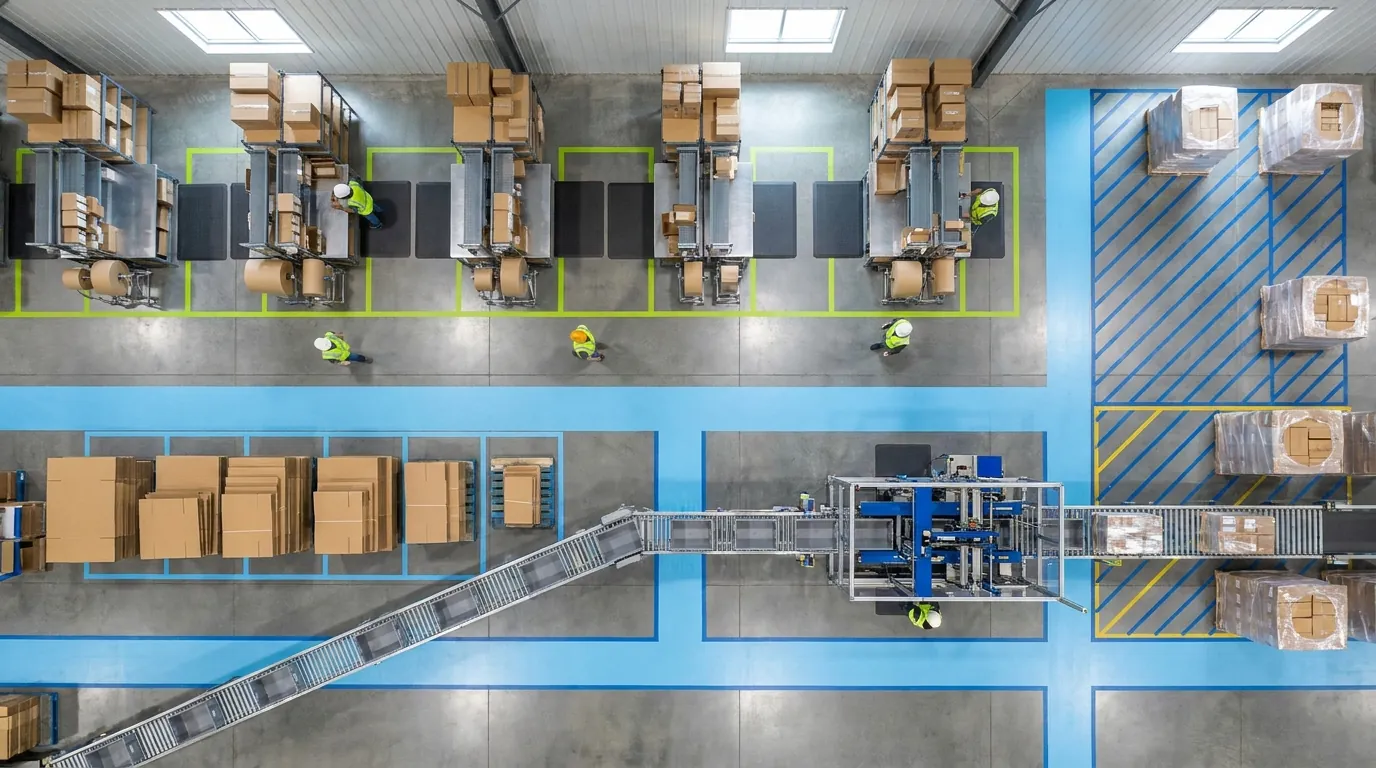
When an Automated Packaging System Makes Sense
Automation can deliver strong returns, but only when the operation and its data are ready. The machine does not decide what goes in the box; it executes instructions. If item dimensions are wrong or orders arrive out of sequence, the line starves, jams, or produces poorly sized packages.
Use the framework below to judge fit before requesting equipment quotes, and model at least two scenarios side by side: improved manual stations versus partial or full automation.
A Five-Factor Decision Framework
- Order volume: Sustained daily volume must keep equipment busy across shifts, not just during peak weeks.
- SKU dimensional variability: Uniform, small items suit automation; wide size ranges favor right-sizing machines or hybrid setups.
- Labor cost and availability: Persistent hiring difficulty or steady wage pressure strengthens the case.
- Peak multiplier: If peak volume runs, for example, two to four times baseline, model whether equipment absorbs the surge or whether temporary labor is cheaper.
- Integration readiness: Your WMS must send accurate cartonization results, item data, and labels in real time.
If three or more factors point toward automation, a detailed ROI model is worth building. If only one or two do, targeted upgrades usually pay back sooner. Our article on how to reduce warehouse costs covers other savings opportunities to weigh while you decide.
Common Implementation Pitfalls
- Dirty item master data: Missing or inaccurate dimensions cause wrong carton calls and rejected packages.
- Ignoring upstream flow: Picking that releases orders in bursts starves or floods the equipment.
- No exception path: Oversized, fragile, or multi-carton orders need a manual lane.
- Underestimating integration: Machines, WMS, and carrier systems must exchange data without lag.
- Measuring the wrong thing: Track throughput per labor hour, cube use, and error counts before and after go-live.
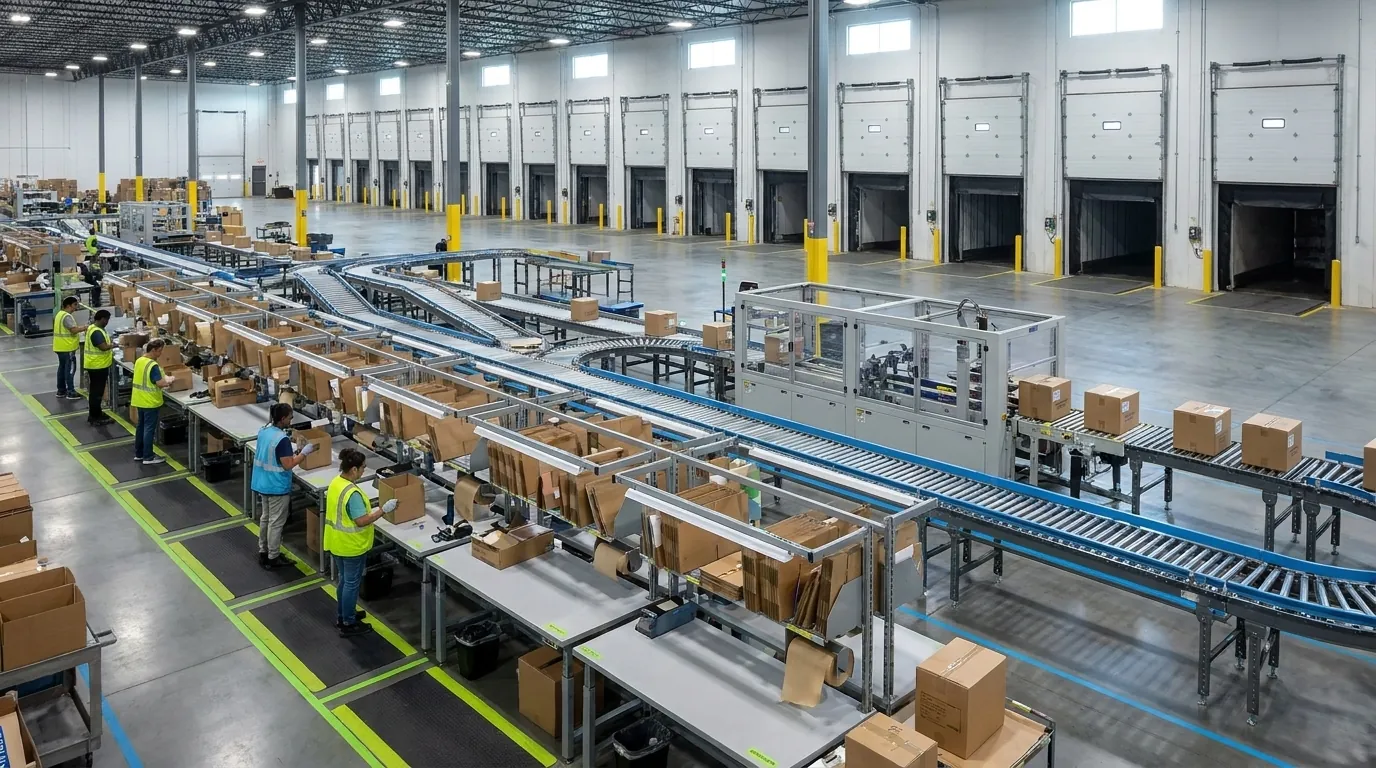
How a WMS Powers Warehouse Packaging
Whether you run ten manual benches or a fully automated line, the WMS is the orchestration layer telling people and machines what to do. It holds item data, applies cartonization rules, sequences work, verifies accuracy, and connects to carriers.
A warehouse management system can fill this role across any packing setup. When the platform you evaluate ties picking, cartonization, verification, and shipping labels together in one workflow, manual benches get clear instructions and automated equipment can receive the exact data it needs to run at rated speed. During evaluation, test that flow with your own SKUs and order profiles rather than sample data.
Cartonization Built on Accurate Item Master Data
Cartonization calculates the best carton for each order using item dimensions, weights, fragility, and your available box lineup. Its output is only as good as the item master. A WMS can store and maintain SKU dimensions and weights, recommend carton sizes before picking begins, and direct pickers to fill the shipping carton directly, eliminating a repack step. That reduces DIM-weight charges and material waste at once. Whatever system you use, schedule periodic re-measurement of fast movers and new items so the recommendations stay trustworthy.
Pick-to-Pack Sequencing and Scan-Based Verification
The system releases and sequences picks so orders reach stations or automated lines in a steady, balanced flow rather than in waves. At pack-out, scan-based verification checks every unit against the order and can flag weight discrepancies, stopping mis-packs before they ship. Exceptions route automatically to a manual station so the automated equipment keeps moving.
Carrier Rate, Label Integration, and Packaging KPIs
Once the carton is sealed, the platform can use its final dimensions and weight to support carrier rate selection and generate compliant labels for station printers or automatic applicators. Barcode formats such as those defined by GS1 help labels scan reliably throughout the carrier network.
Dashboards track packs per hour, cube utilization, carton usage, and mis-ship rate by station and shift. Managers can use that data to rebalance labor, refine the carton suite, and build a credible case for further automation. Request a Demo to see how Sphere WMS handles packing from pick to carrier handoff.
Frequently Asked Questions
What is cartonization in a warehouse?
Cartonization is the process of calculating the best box size for each order before it is packed. Software compares item dimensions, weights, and fragility against the cartons you stock, then recommends one so packers stop guessing. Accurate SKU measurements matter most, because a single wrong dimension can send a whole order into an oversized carton.
How can I lower dimensional weight fees on parcel shipments?
Ship less empty space. Carriers often bill on the greater of actual weight or a size-based calculation, so oversized cartons cost money even when the product is light. Trim your box lineup to match real order profiles, use system recommendations at each bench, and consider an on-demand box maker if high SKU variety makes a fixed carton set inefficient.
Is packaging automation worth it for a small warehouse?
Often not at first. Full automation needs steady daily volume across shifts, predictable order profiles, and clean data to pay back. Smaller operations usually see faster returns from better station layouts, scan verification, and one targeted tool, such as an automatic taper or a label applicator placed at the slowest step.
How does a WMS stop packing errors before orders ship?
A WMS requires packers to scan every item on the order before the carton is sealed, so a wrong SKU or quantity triggers an alert instead of going out the door. Many systems also compare actual parcel weight with expected weight. Orders that fail either check can be diverted to an exception station for review.
What metrics should I track at pack stations?
Start with throughput per packer, shipping cost per order, error rate, and carton fill percentage. Break each one out by shift and station so you can see whether a problem comes from layout, staffing, or materials. Capture a baseline before making any change so improvements can be proven rather than assumed.