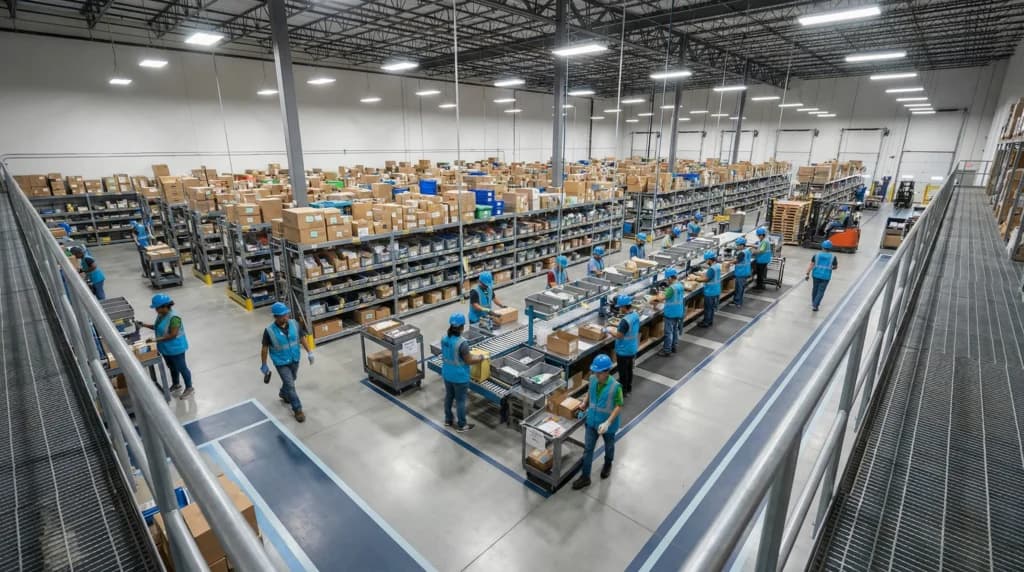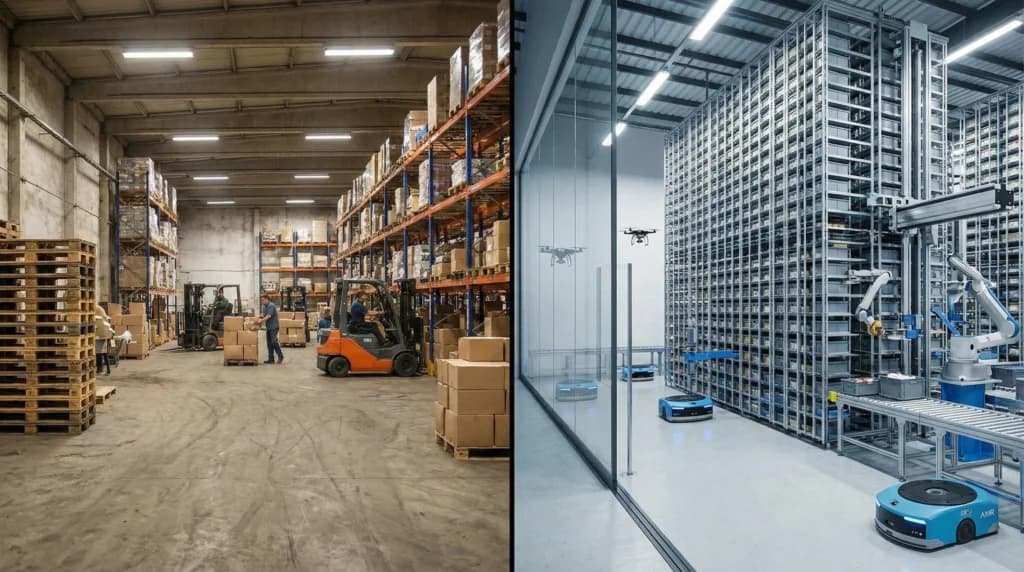
What Is Split Case Order Fulfillment?
Split case order fulfillment is the process of picking, packing, and shipping orders in quantities smaller than a full manufacturer case. Instead of lifting a sealed carton of 24 units, a picker opens that carton and removes five, two, or just one.
That small change reshapes the economics of a building. Every order line needs its own location visit, a unit count, and usually a repack into a shipping carton. For that reason, each-level picking deserves a dedicated workflow inside your broader order fulfillment strategy, not a quick variation on case handling.
Key Terms: Each-Pick, Split Case, Full Case, and Slotting
- Each-pick (piece pick): Selecting individual sellable units.
- Split case: Pulling less than a full carton, often as inner packs or eaches.
- Full case: Handling sealed cartons exactly as the supplier shipped them.
- Pallet picking: Moving full or layer pallets, usually with a forklift.
- Slotting: Assigning each SKU to a specific storage location based on its dimensions and demand.
- Forward pick area: A compact zone of shelving or flow rack holding a limited supply of fast movers, refilled from reserve storage.
For a broader primer on the discipline, Wikipedia's entry on order picking is a useful reference.
Split Case vs. Full Case vs. Pallet Picking
The three approaches differ on almost every dimension that drives cost. Here is how they compare, factor by factor:
- Unit of measure: Pallet picking moves a whole pallet or a layer, carton picking moves a sealed carton, and broken-case picking moves single units or inner packs.
- Typical equipment: Forklifts and pallet jacks for pallets; pallet jacks and conveyor for cartons; carts, totes, flow rack, and shelving for eaches.
- Typical pick rate: Roughly 15-30 pallets per hour, 100-300 cases per hour, and 60-150 order lines each hour for manual each-picking (300+ with light-directed systems).
- Error risk: Low for pallets, moderate for cartons, and highest for loose units.
- Travel share of labor: Moderate, high, and highest (often 50% or more), in that order.
- Packing required: Minimal for pallets, a label and a ship step for cartons, and cartonization, dunnage, and repacking for eaches.
- Cost per unit shipped: Lowest on the pallet side, moderate on the carton side, and highest once cases are opened.
These ranges are rough industry benchmarks. Your numbers will shift with layout, SKU mix, and automation level.
Where Split Case Fits in the Order Fulfillment Process
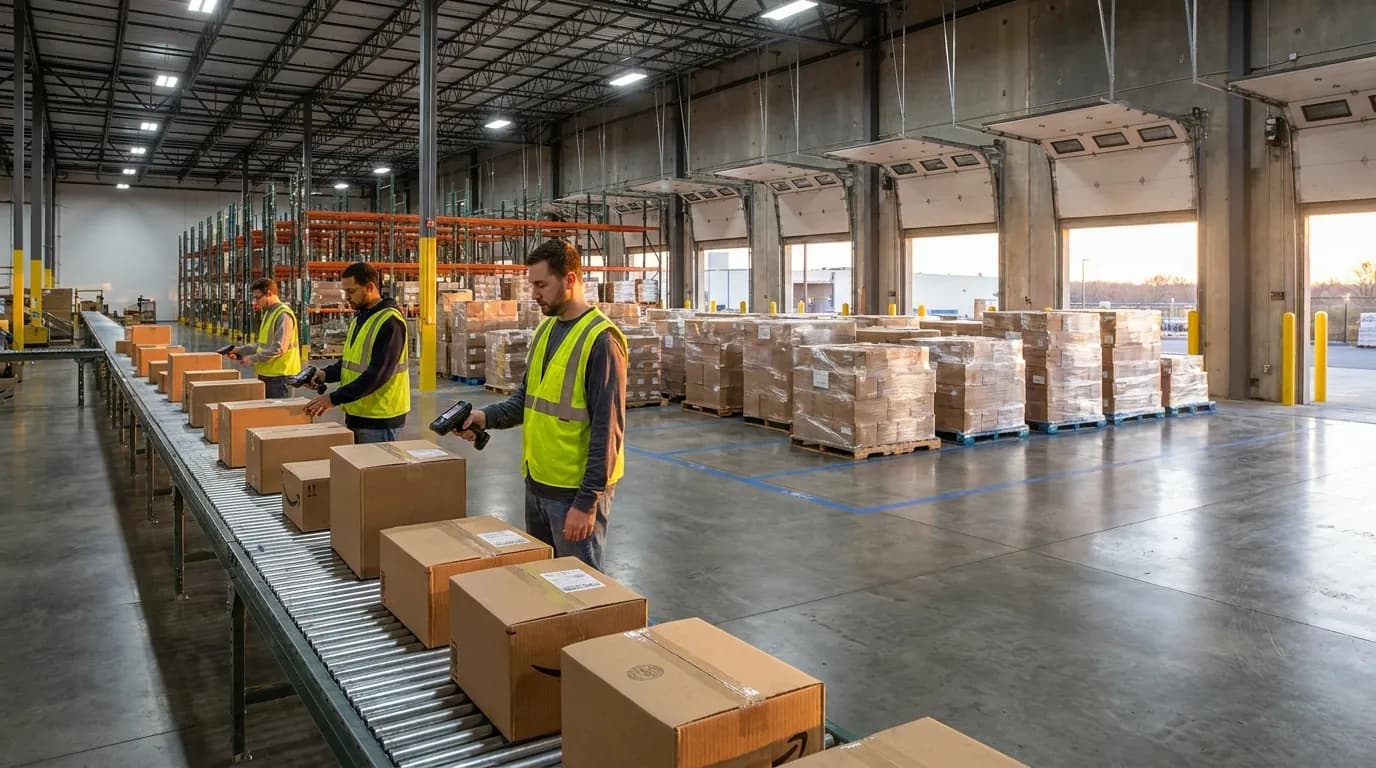
Most mid-market warehouses run a hybrid model. One customer order might combine a pallet of fast movers, several full cases, and a handful of eaches. Each-level picking sits between receiving and replenishment upstream and packing and shipping downstream. It depends on reserve storage feeding a forward pick area, and on consolidation logic that merges loose units with carton and pallet picks before the truck leaves. When those handoffs rely on paper and memory, broken-case work becomes the bottleneck for everything else. For a closer look at how these steps connect, see our pick and pack fulfillment guide.
The Hidden Costs of Split Case Warehouse Fulfillment
Broken-case costs rarely appear as one line item on a P&L. They hide inside walking time, rework, expedited freight, and overtime. Knowing where they originate is the first step toward lowering cost-to-serve, and it complements the broader tactics in our guide on how to reduce warehouse costs.
Excess Travel Time
Studies of manual order picking commonly estimate that travel eats roughly half of a picker's time. With loose units, small lines spread across thousands of SKUs send people walking long distances for low-value picks. Poor slotting makes it worse: when the fastest movers live at the back of the building or on the top shelf, every trip gets longer.
Mis-Picks and Accuracy Erosion
Paper-based each-picking often lands somewhere around 99.0% to 99.5% accuracy. That looks respectable until you multiply it by volume. At 10,000 lines a day, 99.5% still means 50 errors daily. Look-alike SKUs, the wrong unit of measure (an each versus an inner pack), and simple miscounts cause most of them, and each one can trigger a return, a credit, or a lost customer.
Forward-Pick Stockouts
Forward locations hold limited quantities by design. When replenishment runs on a fixed schedule, or waits until a picker notices an empty slot, workers hit short picks. They wait, skip the line, or leave it for someone else. Every short pick can turn into a backorder, a split shipment, and extra freight spend.
Packaging Complexity and Labor Intensity
Loose units have to be cartonized, protected, and labeled. Choosing the wrong box size wastes material and inflates dimensional-weight charges from parcel carriers. Add more touches per unit, and each-level work becomes the most labor-intensive process in the facility, which leaves it most exposed to rising wages and tight labor markets. Our breakdown of warehouse labor costs covers that pressure in more detail.
5 Strategies to Optimize Split Case Operations
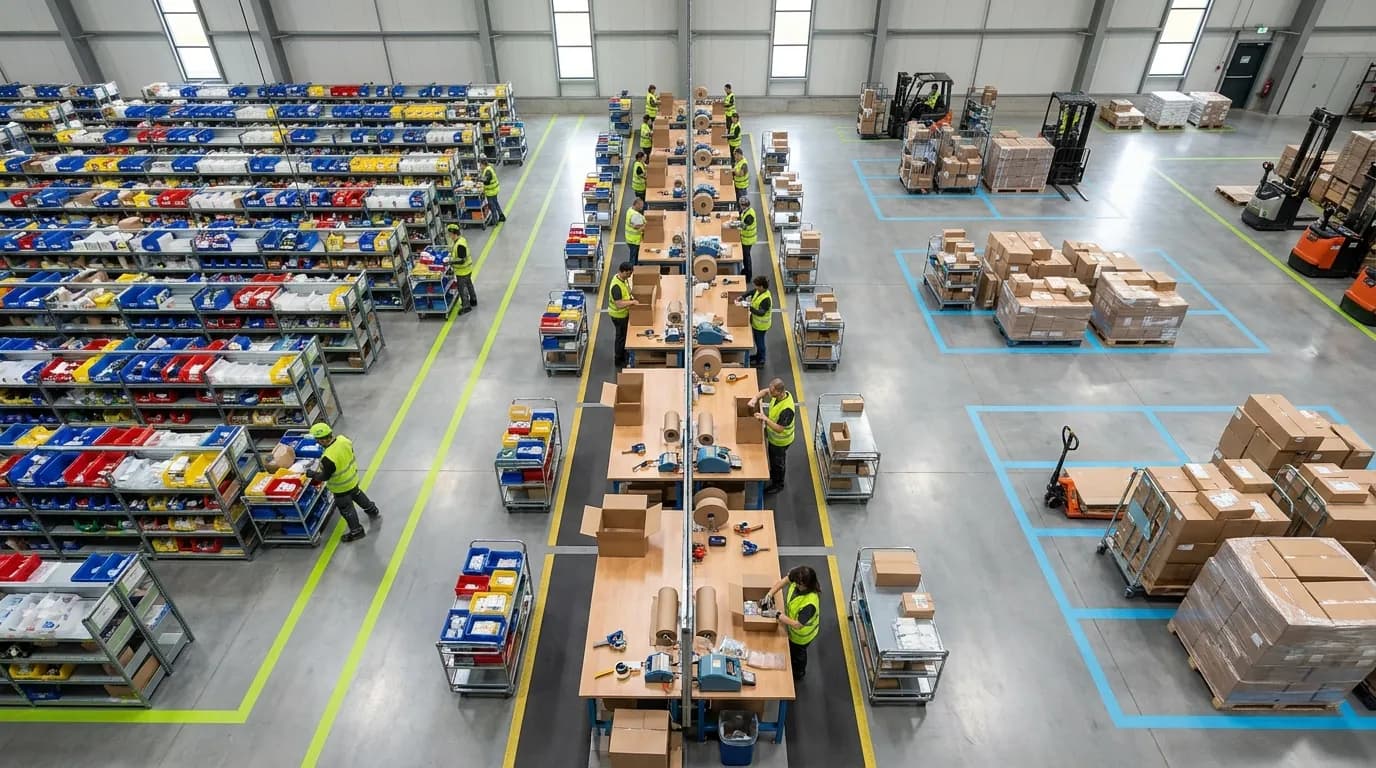
The five levers below form the core of the Split Case Readiness framework. Each one targets a specific cost driver and pairs with a metric, so you measure progress instead of guessing. Work through them in order. Slotting and routing cut travel first, and shorter travel makes every later lever more effective.
1. Velocity-Based Slotting
Rank SKUs by pick frequency (lines picked, not units shipped) and place the top 10% to 20% in the golden zone, roughly waist to shoulder height and closest to pack-out. Keep items that are frequently ordered together near each other, and physically separate look-alike SKUs so pickers cannot grab the wrong one by reflex. Re-slot at least quarterly, or monthly if your demand swings with the seasons.
Metric to watch: Share of picks coming from golden-zone slots (aim for 60% or more) and travel distance per order line.
2. Pick Path Optimization
Sequence each pick list so workers move through a zone in one efficient loop rather than zigzagging between aisles. Serpentine or S-shape routing suits shelving aisles well, while system-generated routes adapt to the specific locations in each batch. Even basic sequencing by location number usually trims a meaningful amount of walking, and it costs almost nothing to start.
Measure it with: Lines picked per labor hour and average travel time per pick.
3. Choosing the Right Pick Method: Discrete, Batch, Zone, Wave, or Cluster
- Discrete: One picker, one order. Simple to run but heavy on travel. Best for large, low-volume orders.
- Batch: Pick the SKUs for several orders at once, then sort them. Cuts walking for small orders with overlapping items.
- Cluster: Pick several orders simultaneously into separate totes on a cart. A strong fit for e-commerce eaches.
- Zone: Pickers stay in assigned areas while orders pass between zones. Useful in large facilities with high SKU counts.
- Wave: Release groups of orders by carrier cutoff or priority. Often combined with zone or batch picking.
Most mixed operations run more than one method and choose among them by order profile. Our order picking solutions guide compares these approaches side by side.
Track progress with: Throughput by pick method and order cycle time.
4. Scan and Light-Directed Pick Verification
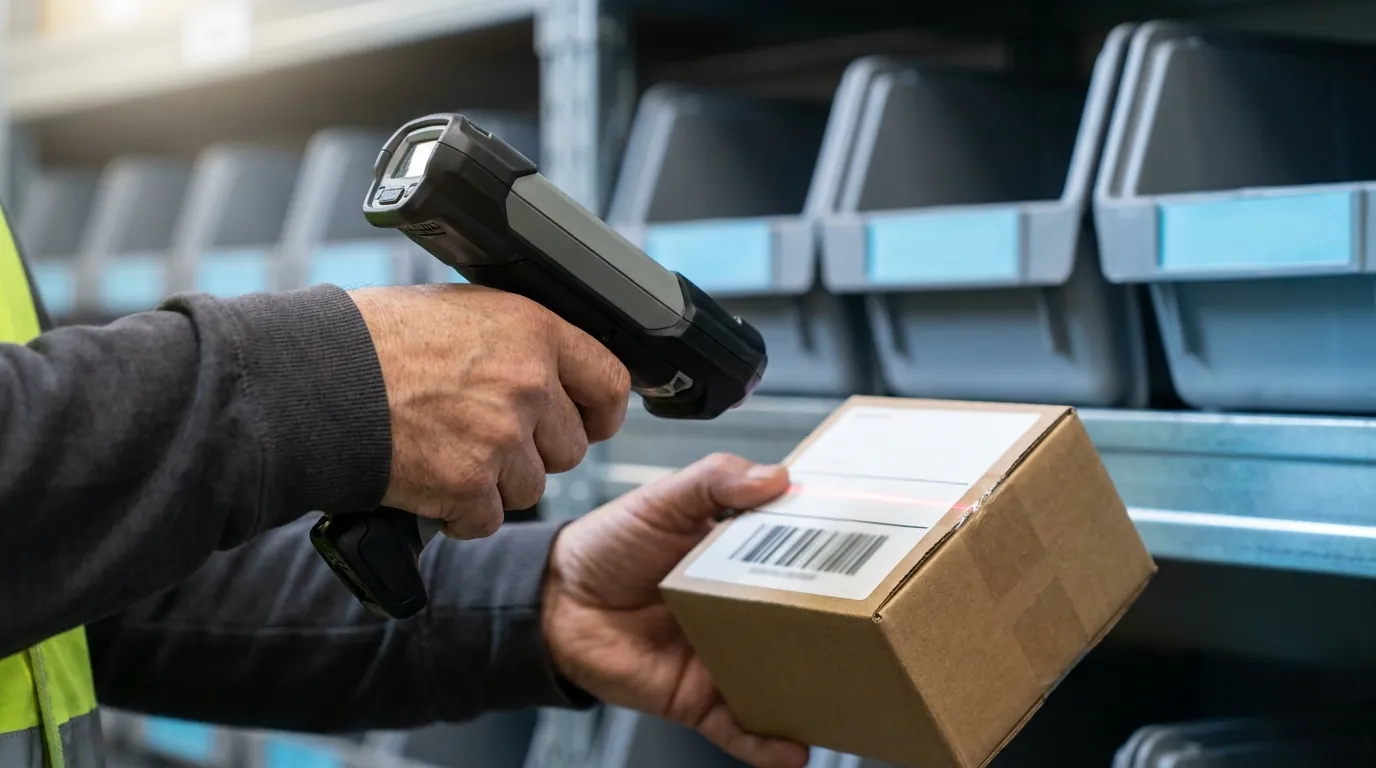
Barcode verification confirms the right SKU, location, and quantity at the moment of the pick, and it commonly pushes accuracy to 99.8% or higher. It works best when product labels follow GS1 barcode standards, so every scanner reads every item the same way. Pick-to-light and put-to-light systems add speed in dense forward zones, where rates above 300 lines an hour are achievable. Choose by volume density: handheld scanning for broad SKU ranges, lights for concentrated fast movers. Our guide to GS1 barcodes for warehouses explains labeling in depth.
What to measure: Order accuracy rate and the cost of each mis-pick.
5. Min/Max Forward-Pick Replenishment Triggers
Set a minimum and a maximum quantity for every forward location, based on demand and slot capacity. When on-hand stock drops to the minimum, the system creates a replenishment task before pickers arrive at an empty slot. On peak days, add demand-based replenishment that tops off locations ahead of each wave.
Key metric: Short picks per 1,000 lines (target near zero) and the share of replenishment tasks finished before wave release.
How a WMS Transforms Split Case and Omnichannel Order Fulfillment
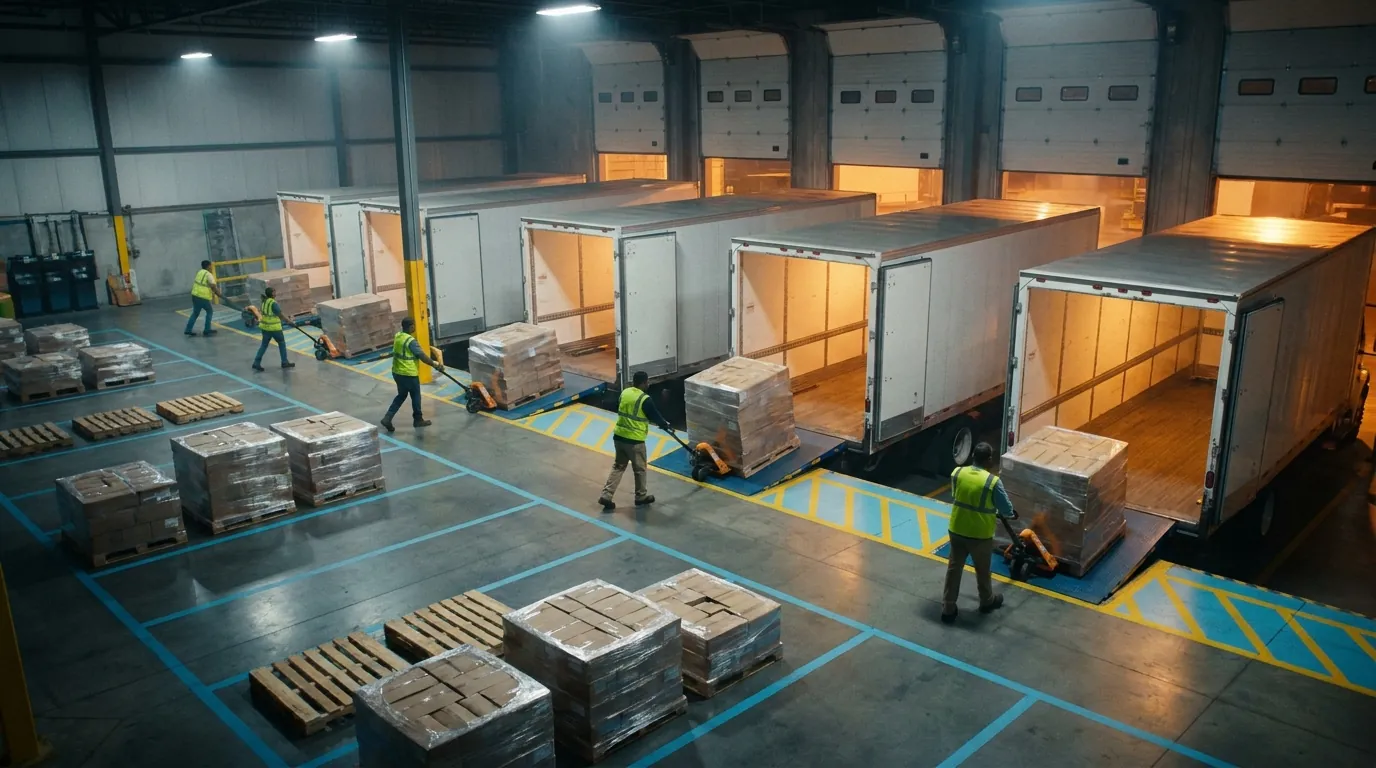
Each lever can be improved by hand, but keeping them tuned across a large catalog with shifting demand takes a system. Spreadsheets cannot re-slot weekly, reroute every batch, or fire replenishment work the moment a slot runs low. A modern warehouse management system turns these levers into automated, measurable workflows. Here is what a WMS can do for each-level work.
Directed Each-Picking and Slotting Intelligence
A WMS can analyze pick velocity and order affinity to recommend slotting moves, then direct pickers along optimized paths on mobile devices. It can assign discrete, batch, cluster, zone, or wave methods based on order profile and carrier cutoffs, so each order follows the most efficient route to the dock.
Automated Replenishment
Min/max and demand-based triggers generate replenishment work automatically, prioritized ahead of upcoming waves. Pickers find stock where they expect it, and short picks become rare rather than routine.
Unified Full-Case, Split Case, and Pallet Workflows
A WMS can manage multiple units of measure for every SKU and break a single order into pallet, carton, and each tasks, then consolidate them at pack-out. Hybrid operations run on one system instead of disconnected processes, with scan checks at every step and cartonization logic that selects the right box for each shipment.
Real-Time Visibility and KPI Dashboards
Supervisors see throughput, accuracy, short picks, and order status live, broken down by zone, method, and individual picker. Instead of discovering problems at the end of a shift, they can rebalance labor while there is still time to hit carrier deadlines. Pairing that data with good coaching habits matters too, which we cover in our piece on managing warehouse employees.
What Improvement Can Look Like
Consider a hypothetical distributor picking 8,000 loose-unit lines per day on paper at 80 lines per hour with 99.3% accuracy. That workload consumes about 100 labor hours daily. If velocity-based slotting, cluster picking, and scan verification raised throughput to 130 to 150 lines hourly, the same volume would need roughly 53 to 62 hours, freeing somewhere between 38 and 47 hours every day. Lifting accuracy above 99.8% would cut errors from about 56 per shift to 16 or fewer. Every facility is different, but the levers behave consistently.
See it in action: Request a demo of Sphere WMS.
The Split Case Readiness Checklist: Benchmark Your Operation
Use this self-assessment to find your weakest lever. Answer each question honestly, then start with the areas where you answered no. Industry groups such as MHI publish material handling resources that can help you compare equipment and practices once you know where the gaps are.
The Self-Assessment
- Slotting: Have you re-slotted fast-moving SKUs by pick frequency in the last 90 days, and do at least 60% of picks come from golden-zone slots?
- Pick paths: Are pick lists sequenced by optimized route rather than by order line?
- Pick method: Do you match the method (batch, cluster, zone, wave) to each order profile instead of using one approach for everything?
- Verification: Is every loose-unit pick confirmed by scan or light, with accuracy of at least 99.8%?
- Replenishment: Are forward locations refilled by min/max triggers, with fewer than 2 short picks per 1,000 lines?
- Visibility: Can you see throughput and accuracy by zone and picker in real time?
How to Score Your Results
- 5 to 6 yes answers: Your each-picking operation is in good shape. Focus on continuous re-slotting and peak-season planning.
- 3 to 4 yes answers: The foundations are solid, but you are leaving labor savings on the table. Target travel and replenishment first.
- 0 to 2 yes answers: Broken-case handling is likely your largest cost-to-serve driver, and a system-directed approach will usually deliver the fastest return.
Frequently Asked Questions
What does split case mean in warehouse picking?
Split case means picking fewer units than a sealed manufacturer carton contains, such as three items from a case of 24. Workers open the carton, count out eaches or inner packs, and usually repack them into a shipping box. This adds touches, counting risk, and packing work compared with moving full cartons.
Why does picking individual units cost more than picking full cases?
Picking individual units costs more because every order line needs its own trip, a manual count, and packaging. Walking alone often takes up about half of a picker's shift when orders are small and SKUs are spread out. Add cartonization, dunnage, and higher error rates, and cost per unit shipped climbs well above pallet or carton handling.
How often should a warehouse re-slot fast-moving SKUs?
Most warehouses should re-slot fast movers at least once a quarter, and monthly if demand is seasonal. Rank items by how many lines they appear on rather than total units shipped, then move the top sellers into waist-to-shoulder locations near pack-out. Regular reviews keep travel short as the product mix changes.
What order accuracy should I aim for with each-picking?
Aim for 99.8% or better. Paper-based processes often land between 99.0% and 99.5%, which sounds high but still produces 50 errors a day at 10,000 lines. Barcode scanning or pick-to-light confirmation at the point of pick is the most dependable way to close that gap.
When does a warehouse need a WMS for each-picking?
A WMS becomes worthwhile when manual methods can no longer keep slotting, routing, and replenishment current. If you handle thousands of SKUs, see frequent short picks, or miss carrier cutoffs because loose-unit orders lag behind, system-directed picking and automatic min/max refills are usually the fastest fix.