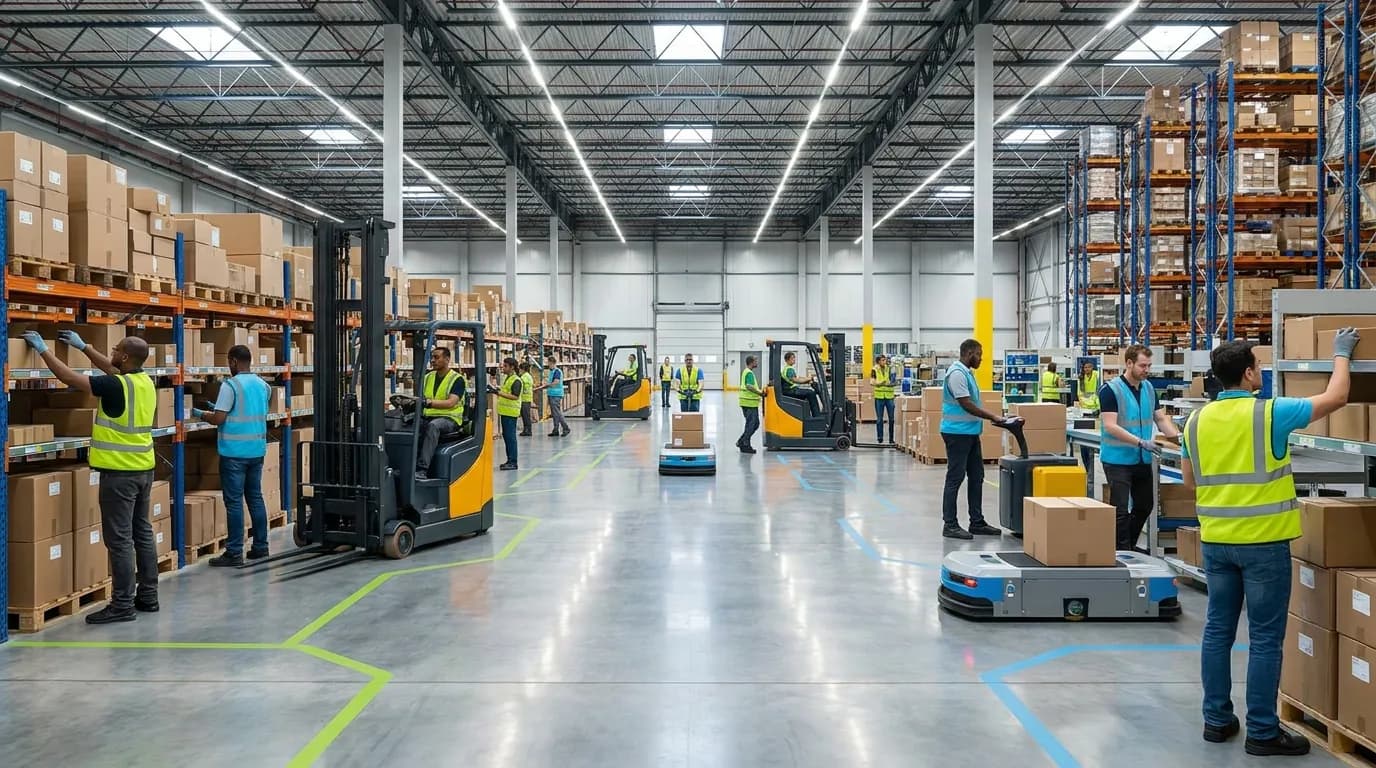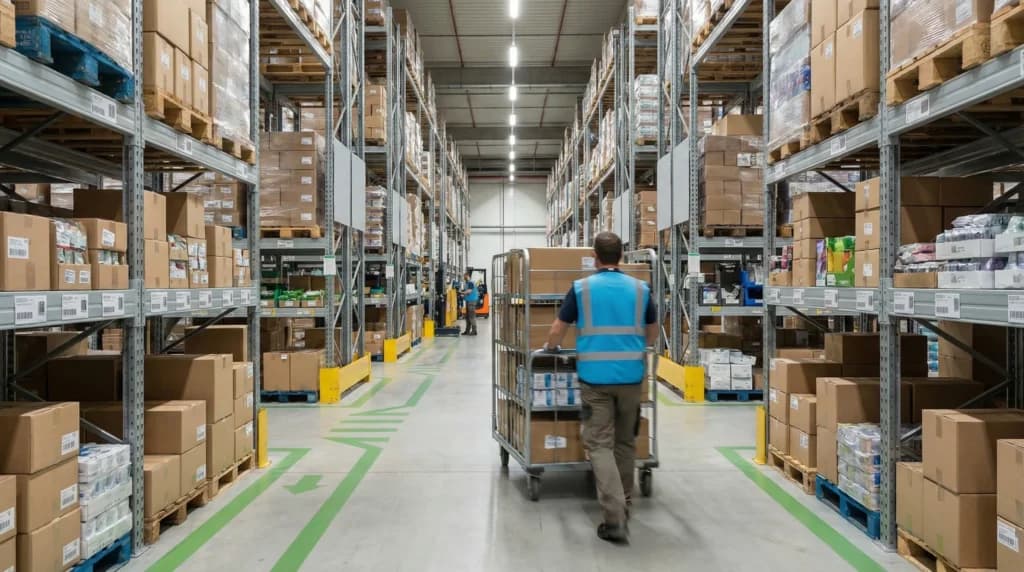
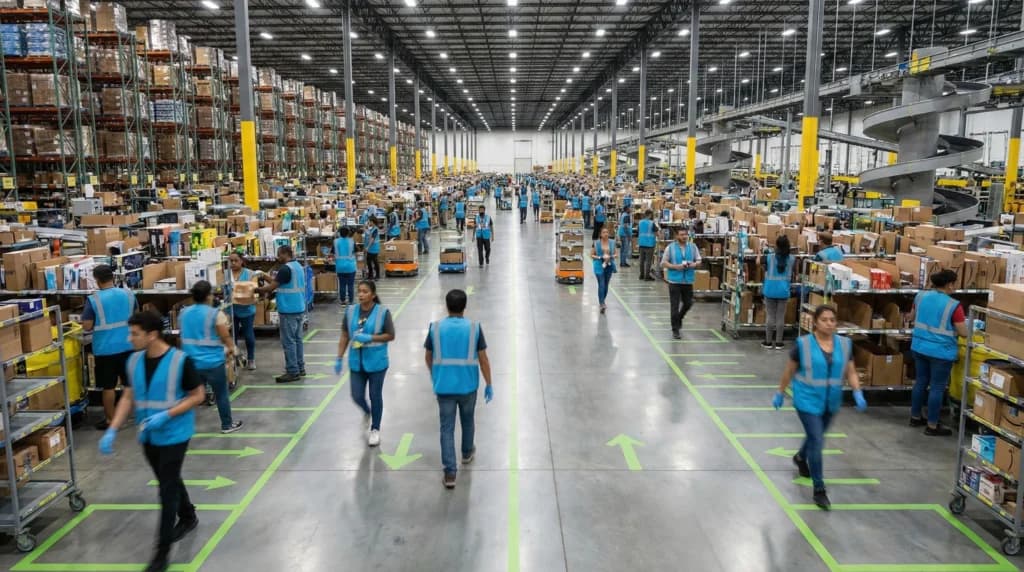
If you’ve ever struggled with keeping inventory accurate, fulfilling orders fast enough, or scaling your e-commerce operations without drowning in logistics complexity, you’re not alone. Thousands of online sellers face these exact challenges every day. The Amazon warehouse system has become the gold standard for efficient fulfillment, processing millions of packages daily with remarkable precision. Understanding how the Amazon warehouse management system works can transform how you approach your own operations. Whether you’re considering the Amazon WMS system for direct selling or exploring Amazon FBA warehousing to outsource your logistics, grasping these concepts is essential for staying competitive.
The gap between thriving e-commerce businesses and those that struggle often comes down to warehouse efficiency. Manual processes, stockouts, shipping delays, and inventory errors eat into profits and damage customer relationships. This guide breaks down exactly how Amazon’s warehouse operations function, what makes them effective, and how you can apply these principles to your business using various warehouse management approaches.
Understanding the Amazon Warehouse System and Its Core Architecture
The Amazon warehouse system operates on a scale that seems almost incomprehensible. With over 175 fulfillment centers worldwide, Amazon processes more than 1.6 million packages daily. But what makes this possible isn’t just size – it’s the sophisticated technology and processes that coordinate every movement within these massive facilities.
At its foundation, the Amazon warehouse system relies on what’s called “chaotic storage” or “random stow.” Unlike traditional warehouses where similar products sit together on designated shelves, Amazon stores items wherever space is available. A book might sit next to dog food, which might neighbor a set of headphones. This approach sounds counterintuitive, but it actually reduces travel time for workers and maximizes storage density.
The system tracks every item’s exact location using a combination of barcode scanning, RFID technology, and sophisticated inventory management software. When an order comes in, the system calculates the most efficient picking route, often combining items from multiple zones into a single trip. This level of optimization would be impossible without advanced warehouse management software at the core of operations.
The Technology Stack Behind Amazon’s Operations
Amazon’s warehouse technology includes several integrated components working in harmony. Automated guided vehicles, or AGVs, transport inventory pods to human workers rather than having workers walk to products. This single innovation has reportedly cut the time to process an order from over an hour to approximately 15 minutes.
Computer vision systems scan packages and verify contents without human intervention. Machine learning algorithms predict demand patterns and pre-position inventory closer to likely buyers. Robotic arms handle repetitive tasks like boxing and labeling while workers focus on quality control and exception handling.
The key insight here isn’t that you need Amazon’s budget to succeed. Rather, it’s understanding that the right technology, properly integrated, can multiply your team’s effectiveness. Even small operations can implement similar principles through cloud-based solutions and strategic automation investments.
Key Features of the Amazon Warehouse Management System

The Amazon warehouse management system encompasses far more than simple inventory tracking. It’s an end-to-end orchestration platform that coordinates receiving, storage, picking, packing, and shipping with minimal friction. Understanding these features helps identify what capabilities your own warehouse operations might need.
Real-Time Inventory Tracking and Visibility
Accurate inventory is the foundation of successful fulfillment. The Amazon WMS system maintains real-time visibility into every item’s location, quantity, and condition. When a customer places an order, the system knows instantly whether that item is available and where to find it.
This visibility extends across Amazon’s entire network. If a product isn’t available in one fulfillment center, the system can route the order to another location that has stock. This distributed inventory approach reduces shipping distances and speeds up delivery times while preventing lost sales from stockouts.
For your own operations, achieving this level of inventory accuracy typically requires:
- Barcode or RFID scanning at every inventory touchpoint
- Cycle counting programs that verify accuracy continuously
- Integration between your WMS and sales channels for automatic updates
- Clear processes for handling returns, damages, and adjustments
- Regular reconciliation between physical counts and system records
Many businesses still rely on periodic physical counts to maintain accuracy. This approach creates blind spots where inventory errors accumulate undetected. Moving to continuous tracking through proper system integrations eliminates these gaps and reduces the chaos of annual inventory audits.
Automated Order Fulfillment Workflows
Order fulfillment in the Amazon warehouse management system follows carefully optimized workflows. When orders enter the system, algorithms immediately begin processing them based on delivery commitments, item locations, and current workload distribution.
Wave planning groups similar orders together for efficient processing. If multiple customers in the same region ordered items stored in similar areas, the system batches these orders to minimize picking travel. This approach can reduce walking time by 40% or more compared to processing orders individually.
The Amazon WMS system also handles exceptions automatically. If an item is damaged or missing during picking, the system can substitute from nearby stock, alert a supervisor, or split the shipment – all without human decision-making for routine scenarios. Only unusual situations escalate to workers, keeping operations moving smoothly.
Pick-to-light and voice-directed picking technologies guide workers through their tasks with minimal training required. A new employee can become productive within hours rather than days. Error rates drop because the system validates each step rather than relying on human memory alone.
Intelligent Slotting and Storage Optimization
Where you store products dramatically affects how quickly you can fulfill orders. The Amazon warehouse system continuously analyzes sales velocity, product dimensions, and picking patterns to optimize storage locations. Fast-moving items get placed in prime picking positions while slower inventory moves to less accessible areas.
This dynamic slotting differs from static warehouse layouts where products keep the same location indefinitely. As demand patterns shift with seasons or trends, the system adapts storage accordingly. A pool float that sits in back storage during winter moves to prime picking position as summer approaches.
For smaller operations, implementing dynamic slotting might seem complex. However, even simple ABC analysis – categorizing products by sales volume and positioning A items for fastest access – can yield significant efficiency gains. The principle matters more than the sophistication of implementation.
Benefits of the Amazon WMS System for E-commerce Businesses
Understanding why Amazon invested billions in warehouse technology helps clarify what benefits you might gain from similar approaches. The Amazon WMS system delivers advantages that compound over time, creating sustainable competitive advantages.
Operational Cost Efficiency and Labor Optimization
Labor typically represents 50-70% of warehouse operating costs. The Amazon WMS system reduces labor costs through multiple mechanisms. Automated picking routes minimize non-productive walking time. Batch processing reduces touches per order. Error reduction eliminates costly reship scenarios and customer service interventions.
Consider a warehouse where pickers spend 60% of their time walking between locations. Optimizing pick routes to reduce walking by just 20% effectively adds 12% more productive capacity without hiring additional staff. That’s like getting an extra person for every eight employees – without the associated payroll costs.
The Amazon warehouse system also improves labor scheduling through predictive analytics. By forecasting order volumes based on historical patterns, promotions, and external factors like weather, the system ensures appropriate staffing levels without overstaffing during slow periods or scrambling during peaks.
Automation handles the most repetitive and physically demanding tasks. This reduces worker fatigue and injury rates while allowing human workers to focus on higher-value activities like quality control and problem-solving. The result is both cost savings and improved employee satisfaction.
Scalability Without Proportional Complexity
Growing an e-commerce business often means growing warehouse headaches. More SKUs, more orders, more complexity. The Amazon WMS system scales efficiently because its processes and technology handle increased volume without proportional increases in management overhead.
When you double order volume in a manual operation, you typically need to more than double your staff and management attention. Errors increase as workers rush to keep up. Training takes longer. Quality suffers. The Amazon warehouse management system, by contrast, absorbs volume increases through its systematic approach. The same rules and workflows that handle 100 orders daily work for 1,000 or 10,000.
This scalability proves especially valuable during peak seasons. Black Friday, Prime Day, and holiday rushes can multiply normal volumes by 5x or more. Without scalable systems, these peaks become crises rather than opportunities. Proper warehouse management infrastructure turns seasonal surges into profitable events.
Improved Customer Experience Through Faster Fulfillment
Customer expectations for shipping speed have increased dramatically. Same-day and next-day delivery, once considered premium services, are now baseline expectations for many shoppers. The Amazon WMS system enables these fast delivery commitments through optimized warehouse operations.
Order accuracy also improves significantly with proper warehouse management. According to Supply Chain Dive, shipping the wrong item costs an average of $50-100 per occurrence when you factor in returns processing, replacement shipping, and customer service time. Reducing errors from 3% to 0.5% on 10,000 monthly orders saves substantial money while protecting customer relationships.
Real-time inventory visibility prevents the frustrating scenario where customers order items that turn out to be unavailable. Overselling damages trust and often loses customers permanently. Accurate inventory sync between your WMS and sales channels eliminates this problem at its source.
Utilizing Amazon FBA Warehousing for Business Growth

Not every business needs to build its own warehouse infrastructure. Amazon FBA warehousing offers an alternative path where Amazon handles storage, picking, packing, and shipping on your behalf. This model has transformed how many e-commerce businesses approach logistics.
Core Benefits of the FBA Model
Amazon FBA warehousing provides immediate access to Amazon’s sophisticated fulfillment infrastructure without capital investment. You send inventory to Amazon’s fulfillment centers, and they handle everything from there. When customers order, Amazon picks, packs, and ships using their optimized processes.
The primary benefits of Amazon FBA warehousing include:
- Prime eligibility, which can significantly boost sales conversions
- Access to Amazon’s carrier relationships and shipping rates
- 24/7 customer service and returns handling
- No need for warehouse space, equipment, or fulfillment staff
- Scalability to handle seasonal peaks without fixed costs
- Multi-channel fulfillment options for non-Amazon orders
For newer businesses or those testing new product lines, FBA removes significant barriers to entry. You can launch products without committing to warehouse leases or hiring fulfillment staff. If products don’t sell as expected, you’re not stuck with fixed infrastructure costs.
The Prime badge alone can increase conversion rates substantially. Many Amazon shoppers filter search results to show only Prime-eligible items. Without FBA or Seller Fulfilled Prime, you might never appear in these searches, limiting your potential customer base.
Understanding FBA Costs and Trade-offs
Amazon FBA warehousing isn’t free, and the fee structure can be complex. Storage fees, fulfillment fees, long-term storage penalties, and various surcharges add up. For some products, these costs make FBA uneconomical.
Generally, FBA works best for products that are small and lightweight, have healthy profit margins, turn over relatively quickly, and sell primarily through Amazon’s marketplace. Large, heavy items with thin margins often make more sense to fulfill yourself or through a third-party logistics provider.
The loss of control can also create challenges. You can’t customize packaging, include promotional inserts, or build direct customer relationships when Amazon handles fulfillment. For brands focused on the unboxing experience or building customer loyalty, this limitation matters.
Inventory planning becomes more complex with FBA because you’re managing stock across multiple locations without direct visibility into Amazon’s fulfillment centers. Running out of stock triggers ranking penalties that can take weeks to recover from. Overstocking incurs storage fees that erode margins. Finding the right balance requires careful demand forecasting and inventory management discipline.
Real-World Applications of FBA Strategy
Consider a small business selling specialty kitchen gadgets. Before using Amazon FBA warehousing, they fulfilled orders from a garage, spending evenings and weekends packing boxes. Growth was limited by their physical capacity and time availability.
After transitioning to FBA, they could focus on sourcing new products and marketing rather than operational logistics. Sales increased because Prime eligibility brought more visibility. The business scaled to six figures without adding warehouse staff or space.
Another scenario involves a business selling large outdoor furniture. FBA fees would consume most of their margin, and the products require assembly instructions and specific packaging. This business benefits more from controlling their own fulfillment where they can manage costs and customer experience directly.
The right approach depends on your specific products, margins, growth stage, and strategic priorities. Many successful sellers use a hybrid model, with best-selling items in FBA for visibility and efficiency while managing specialty or low-margin items through their own operations or alternative fulfillment partners.
Comparing Amazon’s WMS with Other Warehouse Management Systems
Amazon built their warehouse management system specifically for their unique needs and scale. While impressive, their approach isn’t always the right model for independent e-commerce businesses. Understanding how different warehouse management systems compare helps you make informed decisions for your operations.
When Amazon’s Approach Works and When It Doesn’t
The Amazon warehouse system optimizes for massive scale, extreme speed, and standardized processes. These priorities make sense when you’re processing millions of orders across hundreds of facilities. They might not align with smaller operations that need flexibility and personalization.
Amazon’s chaotic storage model, for example, requires sophisticated technology to function. Without their level of inventory tracking and system integration, random storage would create chaos rather than efficiency. Smaller operations often benefit from more intuitive organization systems that workers can manage without complex technology dependencies.
The heavy automation in Amazon fulfillment centers requires significant capital investment and technical expertise to maintain. For businesses processing hundreds rather than millions of orders daily, this level of automation rarely provides positive return on investment. Simpler tools with appropriate technology support often deliver better results.
Consider the differences between a business fulfilling 200 orders per day versus Amazon’s scale. At 200 orders, you probably know your products intimately. You can optimize storage based on personal knowledge rather than algorithms. Flexible processes let you handle special requests that rigid systems would reject. The right WMS for this scale provides structure and efficiency without over-engineering the operation.
Key Considerations When Evaluating WMS Solutions
Choosing the right warehouse management system requires evaluating several factors beyond raw feature lists. The best system for your business depends on your specific situation, growth trajectory, and operational priorities.
Integration capabilities matter enormously. Your WMS needs to connect smoothly with your sales channels, accounting software, shipping carriers, and any other systems in your technology stack. Poor integration creates manual data entry, errors, and delays. Strong API integration capabilities enable automation that saves time and reduces mistakes.
Scalability should match your growth expectations. A system that works perfectly for your current volume might create bottlenecks as you grow. Conversely, an enterprise-level system might be overkill and overly complex for current needs. Look for solutions that can grow with you without requiring complete replacement.
Other critical evaluation factors include:
- Implementation complexity and time to go live
- Training requirements for your team
- Ongoing support and system reliability
- Total cost of ownership including hidden fees
- Mobile capabilities for warehouse floor operations
- Reporting and analytics for operational visibility
- Customization options for unique processes
User experience often gets overlooked but significantly impacts adoption and effectiveness. A feature-rich system that workers find confusing won’t deliver its potential benefits. The best warehouse management systems balance capability with usability, making sophisticated functionality accessible to everyday users.
Flexibility and Customization in Modern WMS Solutions
Unlike Amazon’s internally-focused system, commercial warehouse management solutions must serve diverse business needs. This requirement drives different design priorities toward flexibility and customization.
Businesses selling through multiple channels need systems that handle varying requirements gracefully. Amazon orders might require specific packaging while direct website orders include branded inserts. Wholesale orders have different picking and shipping requirements than individual consumer orders. A good WMS accommodates these differences without creating separate workflows for each channel.
Industry-specific needs also vary considerably. Food and beverage operations require lot tracking and expiration date management. Electronics distributors need serial number tracking. Apparel companies manage size and color matrices. Medical supply distributors must maintain compliance documentation. One-size-fits-all systems struggle to address these specialized requirements.
The ability to modify workflows as your business evolves protects your technology investment. Processes that work today might need adjustment as you add product lines, enter new markets, or respond to competitive pressures. Rigid systems become obstacles to change rather than enablers of growth.
Security and Compliance Considerations
Warehouse management systems handle sensitive data including customer information, inventory values, and operational details. Security matters both for protecting this data and for meeting compliance requirements from customers and partners.
Larger retailers and marketplaces increasingly require their suppliers and fulfillment partners to demonstrate security compliance. SOC 2 certification has become a common requirement, validating that systems and processes meet established security standards. Choosing a WMS provider with appropriate certifications can open doors to valuable business relationships.
Data backup and disaster recovery capabilities protect against business disruption. Understanding how your WMS handles system failures, data corruption, or other emergencies helps you evaluate operational risk. Cloud-based systems typically offer stronger disaster recovery than on-premise installations, though this varies by provider.
Best Practices for Optimizing Your Warehouse Operations
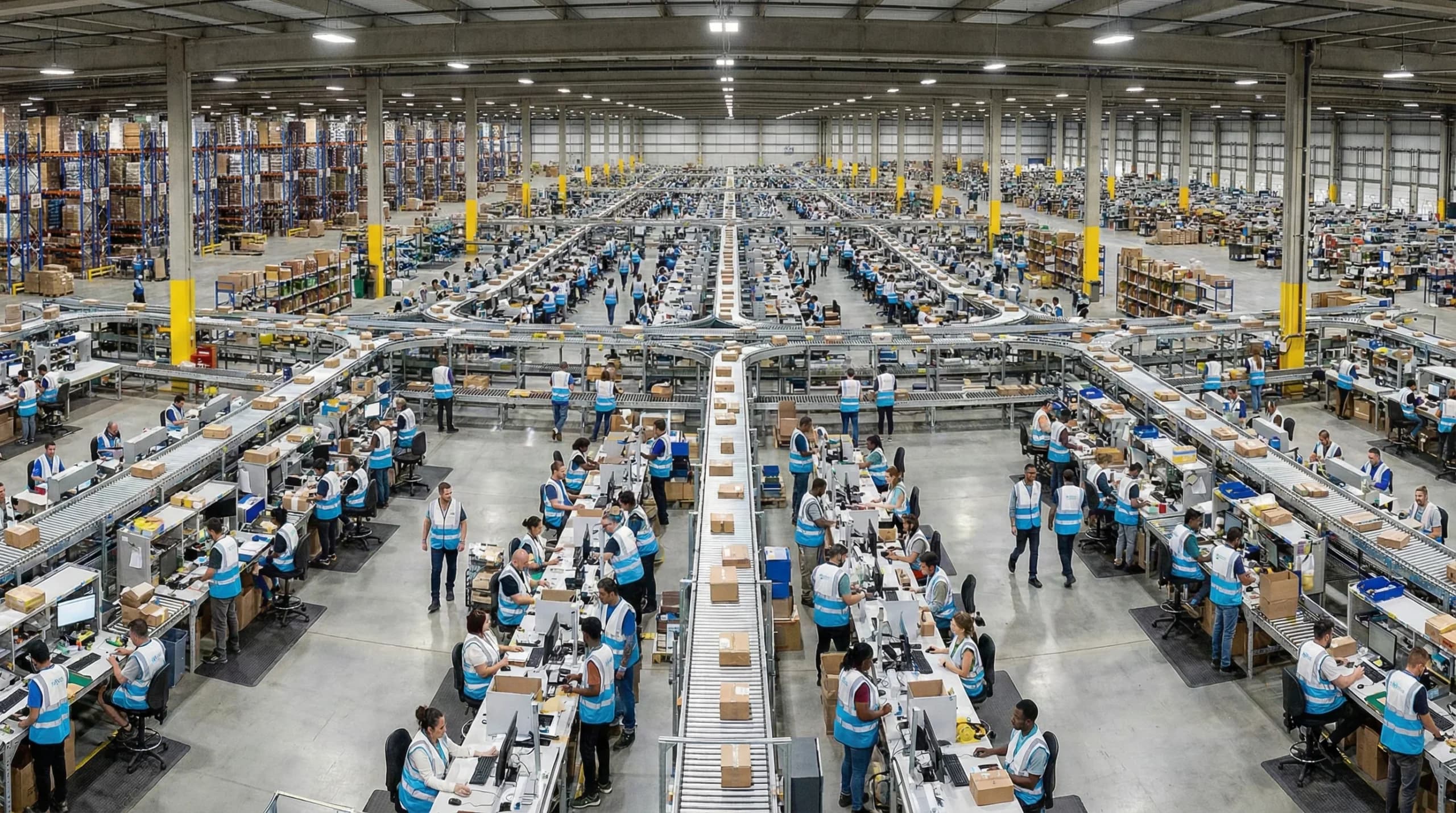
Whether you use Amazon FBA warehousing, manage your own fulfillment, or employ a hybrid approach, certain best practices apply universally. These principles, drawn from observing what makes operations like the Amazon warehouse system successful, can improve any fulfillment operation.
Establish Accurate Baseline Data
You can’t improve what you don’t measure. Before implementing any changes, establish baseline metrics for key performance indicators. Track picking accuracy, orders shipped per labor hour, inventory accuracy, order cycle time, and shipping cost per order. These measurements reveal where improvements will have the greatest impact.
Many businesses discover during this baseline assessment that their perceived problems differ from actual bottlenecks. You might assume picking takes too long when the real delay happens during packing. Data reveals the truth and focuses improvement efforts appropriately.
Standardize and Document Processes
Consistency enables efficiency. The Amazon warehouse management system succeeds partly because every worker follows the same procedures. Variations in process create variations in results, usually for the worse.
Document your standard operating procedures for every warehouse activity. Receiving, put-away, picking, packing, shipping, returns processing, and inventory counting all benefit from clear, written procedures. Train workers to follow these procedures and audit compliance regularly.
Process documentation also accelerates training for new employees and provides a foundation for continuous improvement. You can’t improve a process that isn’t defined. Starting with documented standards allows structured experimentation and measurement.
Implement Continuous Improvement Cycles
The Amazon WMS system didn’t reach its current sophistication overnight. It evolved through countless iterations, each building on previous improvements. Your operations can follow the same pattern through structured continuous improvement.
Regular review of performance metrics identifies improvement opportunities. Weekly or monthly operations reviews should examine trends, investigate root causes of problems, and test potential solutions. Small improvements compound over time into significant competitive advantages.
Involve frontline workers in improvement efforts. The people doing the work every day often have the best ideas for making it better. Create channels for suggestions and recognize improvements that come from the warehouse floor.
Connect Your Shipping Operations
The final mile of fulfillment often determines customer satisfaction. Fast, accurate warehouse operations lose their impact if shipping delays or errors occur afterward. Integrating your WMS with shipping software and carriers ensures smooth handoffs from picking through delivery.
Automated carrier selection based on package dimensions, destination, and service requirements optimizes shipping costs. Rate shopping across multiple carriers for each shipment can reduce shipping expenses substantially over time. These savings go directly to your bottom line or fund competitive shipping offers to customers.
Tracking information should flow automatically from carriers back to customers and your customer service team. Proactive communication about shipping status reduces “where’s my order” inquiries and builds customer confidence. Problems that arise during shipping become visible quickly, enabling faster resolution.
Making the Right Choice for Your Business
The Amazon warehouse system represents one approach to warehouse management, optimized for Amazon’s specific needs. Your business has different requirements, constraints, and opportunities. The right solution matches your actual situation rather than copying what works for someone else.
Small businesses with limited product catalogs and manageable order volumes might thrive with relatively simple systems. Growing businesses approaching scale inflection points need solutions that can grow with them. Established operations with complex requirements need sophisticated capabilities and proven reliability.
Amazon FBA warehousing makes sense for some products and business models while creating unnecessary constraints for others. Third-party logistics providers offer another option, handling fulfillment without the Amazon-specific limitations of FBA. Self-fulfillment with the right WMS provides maximum control and customization potential.
According to research from Forbes, the most successful e-commerce businesses evaluate their fulfillment strategy regularly as conditions change. What worked during startup might not serve you well at scale. Quarterly reviews of fulfillment costs, capabilities, and customer satisfaction help identify when changes are needed.
Conclusion and Next Steps
Mastering warehouse management separates thriving e-commerce businesses from those that struggle with operational chaos. The principles behind the Amazon warehouse system – accurate inventory, optimized processes, appropriate automation, and continuous improvement – apply at any scale. Whether you use Amazon FBA warehousing, manage your own fulfillment, or combine approaches, these fundamentals drive success.
The Amazon warehouse management system offers valuable lessons, but your implementation should match your specific needs rather than copying Amazon’s approach directly. Start with clear measurement of current performance, standardize your processes, and build improvement systematically over time.
Technology choices matter, but they’re means rather than ends. The right warehouse management system amplifies your team’s capabilities and supports your growth objectives. The wrong system creates frustration and limits your potential regardless of its feature list.
If you’re evaluating how to improve your warehouse operations, consider starting with a thorough assessment of current processes and pain points. Understanding why warehouse management software matters helps frame your evaluation criteria. Then explore solutions that match your scale, industry, and growth trajectory.
Ready to optimize your warehouse operations? Contact SphereWMS for a consultation to discuss your specific challenges and objectives. Our team can help you evaluate options, understand trade-offs, and identify the approach that best serves your business goals. You can also explore our warehouse management solutions to see how modern WMS capabilities can transform your fulfillment operations.
Frequently Asked Questions
How does the Amazon warehouse system work?
The Amazon warehouse system uses chaotic storage and advanced technology for efficiency. Items are stored randomly to reduce travel time and maximize space. Barcode scanning and RFID technology track each item’s location, while software calculates the best picking routes. This system allows Amazon to process over 1.6 million packages daily with high precision and speed.
What is the Amazon warehouse management system?
The Amazon warehouse management system (WMS) organizes and optimizes warehouse operations. It uses advanced software to manage inventory, track items, and streamline order fulfillment. Key technologies include barcode scanning, RFID, and automated guided vehicles. This system enables Amazon to maintain high efficiency and accuracy in processing millions of packages daily.
Why use Amazon FBA warehousing for your business?
Amazon FBA warehousing allows businesses to outsource logistics to Amazon’s efficient system. It handles storage, packing, and shipping, freeing sellers to focus on growth. This service leverages Amazon’s advanced technology and global fulfillment network. By using FBA, businesses can improve delivery speed and customer satisfaction while reducing logistical burdens.
What technologies power the Amazon WMS system?
The Amazon WMS system is powered by barcode scanning, RFID, and automated guided vehicles. These technologies streamline inventory management and order fulfillment. Automated guided vehicles transport inventory to workers, reducing processing time significantly. This integration ensures precise tracking and efficient operations within Amazon’s vast warehouse network.
How does chaotic storage benefit the Amazon warehouse system?
Chaotic storage increases efficiency by reducing worker travel time and maximizing space. Items are stored wherever space is available, not by category. This method may seem disorganized but allows for quicker item retrieval. It enables Amazon to process large volumes of orders swiftly, supporting their high-speed fulfillment model.