
Anyone in the 3PL business knows that it’s a constantly changing and challenging industry. It can be difficult to stay on top of all the latest trends and technologies, let alone implement them effectively. That’s why it’s important to have a solid understanding of 3PL best practices.
In this article, we’ll discuss some logistics industry standard practices and tips for success that can help you grow your supply chain business.
What is a Third-Party Logistics Provider (3PL)?
A 3PL, or third-party logistics provider, is a company that outsources logistics services on behalf of other businesses. 3PLs offer a variety of services such as transportation, warehousing, and distribution. They can also provide value-added services such as order fulfillment, packaging, and assembly.
3PLs play an important role in the supply chain by helping businesses to optimize their logistics operations. By outsourcing to a 3PL, businesses can save time and money, and free up resources to focus on other areas of their business.
Best Practices for Third-Party Logistics Providers (3PLs)
There is no one-size-fits-all solution for 3PLs, but there are some standard practices that can help 3PLs to perform better and grow their business.

1. Implement a Robust Technology Infrastructure
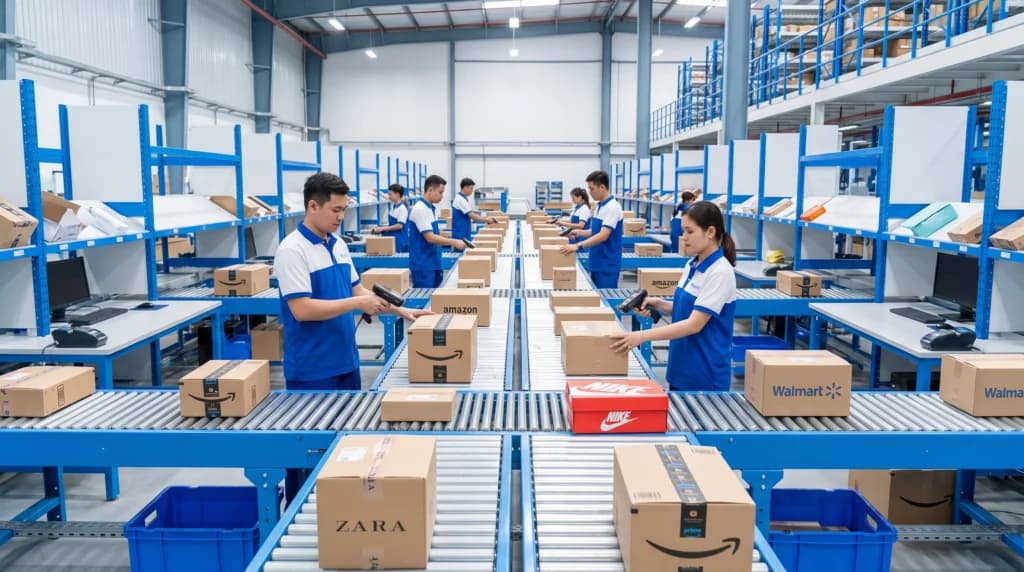
A strong technology infrastructure is essential for any logistics provider. 3PLs should invest in robust and scalable software solutions that can grow with their business. Automation technology and robotics can also help improve warehouse operations – but they should only be implemented if they are projected to improve ROI.
To get the most out of 3PL technology, consider using a warehouse management system (WMS) like SphereWMS. A WMS can help you automate many of your 3PL operations, from receiving and put-away to order picking and shipping. It can also provide real-time inventory visibility and allow you to manage your 3PL business from one central platform.

2. Build Strong Relationships with Customers and Suppliers
Customers and suppliers are the lifeblood of any 3PL. It’s important to build strong relationships with both. Good customer service is essential for keeping existing customers happy and attracting new ones.
Make sure you clearly communicate your 3PL services and pricing to your customers. Be upfront about any potential risks or challenges that may impact their supply chain. By being transparent, you can build trust and avoid any surprises down the road. This will help strengthen the customer relationship and increase customer satisfaction.
You should also develop strong relationships with your suppliers and trading partners. Good supplier relations can lead to improved communication, lower costs, and better quality control. 3PLs should look for ways to add value for their suppliers, such as by offering inventory management or transportation services.
Performance Metrics and KPI Tracking for 3PL Success
Effective performance measurement is fundamental to 3PL growth and operational excellence. Without clear metrics and consistent tracking, logistics providers cannot identify improvement opportunities or demonstrate value to clients.
Essential Operational Metrics
Successful 3PLs monitor key performance indicators across multiple operational areas. Order accuracy rates should consistently exceed 99.5%, while on-time delivery performance typically targets 95% or higher. Inventory accuracy must maintain 99% precision to prevent stockouts and overstock situations.
Warehouse productivity metrics include picks per hour, receiving dock-to-stock time, and space utilization rates. Leading 3PLs track these metrics daily and establish benchmark comparisons against industry standards. For example, e-commerce fulfillment operations often target 150-200 picks per hour for standard items.
Financial Performance Indicators
Revenue per square foot and cost per shipment provide crucial insights into facility efficiency and profitability. Track labor costs as a percentage of revenue, aiming to keep warehouse labor between 8-12% of total operational costs. Monitor accounts receivable turnover and days sales outstanding to maintain healthy cash flow.
Customer-Focused Metrics
Customer satisfaction scores and retention rates directly impact long-term growth. Measure claim rates (damaged or lost shipments) and resolution times for customer issues. Best-in-class 3PLs achieve customer retention rates above 90% and resolve service issues within 24-48 hours.
Warehouse Layout Optimization and Space Management
Efficient warehouse design and space utilization directly impact operational costs and service quality. Strategic layout optimization can improve productivity by 15-25% while reducing labor costs and minimizing errors.
Zone-Based Storage Strategies
Implement ABC analysis to categorize inventory by velocity and frequency. Place high-velocity items (A items) closest to packing and shipping areas, reducing travel time for pickers. Fast-moving products should occupy no more than 20% of storage space but represent 80% of picking activity.
Create dedicated zones for different product categories, such as hazardous materials, temperature-controlled items, and oversized products. This segregation improves safety compliance and operational efficiency while enabling specialized handling procedures.
Vertical Space Utilization
Maximize cubic storage capacity through strategic rack configuration and vertical storage systems. Consider these optimization techniques:
- Implement narrow aisle systems to increase storage density by 30-40%
- Use mezzanine floors for light inventory or office space
- Deploy vertical lift modules (VLMs) for small parts storage
- Install automated storage and retrieval systems (AS/RS) for high-density requirements
Cross-Docking and Flow-Through Operations
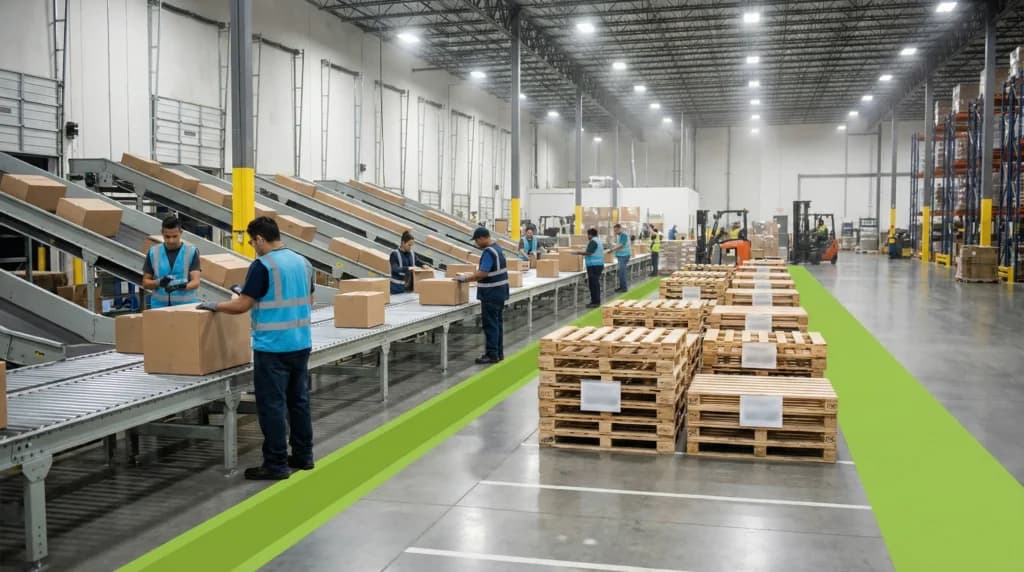
Design dedicated cross-docking areas to minimize handling and storage costs for fast-moving inventory. Optimal cross-dock facilities allocate 15-20% of total warehouse space for receiving, sorting, and immediate outbound processing. This approach reduces inventory holding costs and accelerates order fulfillment for time-sensitive shipments.
Position cross-dock areas near both inbound and outbound dock doors to minimize internal transportation distances. Implement clear floor marking and staging areas to maintain organized workflow during peak processing periods.
3. Focus on Continuous Improvement
The 3PL industry is constantly changing, so it’s important to stay ahead of the curve. As a 3PL service provider, you should continuously look for ways to improve your operations and services. This could involve investing in new technologies, expanding your service offerings, and improving your customer service and operational efficiency.
One way to drive continuous business process improvement is to set measurable goals and track your progress over time. This will help you to identify areas of your 3PL business that need improvement and track your progress toward your goals.

4. Hire and Retain Top Talent
Your employees are your most valuable asset, so it’s important to hire and retain top talent. 3PLs should focus on attracting and retaining employees with the skills and knowledge necessary to succeed in the logistics industry.
To attract top talent, 3PLs should offer competitive salaries and benefits, as well as opportunities for career growth. 3PLs should also create a positive work environment that employees enjoy coming to every day.
5. Invest in Marketing and Sales
Marketing and sales are important for any business, but they are particularly important for 3PLs. 3PLs should focus on marketing their services to both existing and potential customers. 3PLs should also invest in sales so that they can build relationships with new customers and grow their business.
There are many ways to market and sell 3PL services. 3PLs can use online marketing, offline marketing, or a combination of both. 3PLs can also partner with other businesses to market their services. 3PLs should also consider attending trade shows and events so that they can meet potential customers in person.
6. Offer Value-Added Services
Value-added services can be a great way to differentiate your 3PL business from the competition. 3PLs should focus on offering services that add value for their customers and help them to succeed. Some examples of value-added services include:
- Packaging and Assembly
- Kitting
- Reverse Logistics
- And more
8. Understand Your Customers’ Needs
To be successful, 3PLs need to understand their customers’ needs. 3PLs should focus on understanding their customers’ business processes and supply chains. This will allow them to develop custom solutions that meet customer demand. 3PLs should also keep up with industry trends so that they can anticipate their customers’ needs.

9. Have a Strong Understanding of Your Costs
3PLs need to have a good understanding of their costs in order to be profitable. 3PLs should track all their costs, including warehousing, labor, and transportation costs. By knowing their costs, 3PLs can better price their services and improve their bottom line.
10. Be Flexible and Adaptable
3PLs need to be flexible and adaptable to meet the ever-changing needs of their customers and the logistics industry. 3PLs should have a good understanding of their customers’ business and be able to adjust their operations accordingly.
3PLs also need to be able to quickly adapt to changes in the marketplace. This includes implementing new technology as it proves itself to be useful, for example, blockchain and smart contract management.
11. Partner with the Right Supply Chain Companies
3PLs need to partner with the right companies in the freight and logistics industry in order to be successful. 3PLs should partner with supply chain companies that complement their strengths and fill in their weaknesses. 3PLs also need to partner with companies that share their values and vision.
By following these best practices, third-party logistics companies can perform better and grow their business. 3PLs should always be looking for ways to improve their operations and provide more value for their customers.
With that in mind, consider whether or not your 3PL business is doing everything it can to be successful. If not, make the necessary changes and start following these best practices today.
Risk Management and Compliance in 3PL Operations
The 3pl industry faces increasing regulatory scrutiny and operational risks that can significantly impact business continuity. Effective risk management strategies separate successful providers from those that struggle with disruptions and compliance issues.
Insurance and Liability Protection
3PL providers must maintain comprehensive insurance coverage that protects both their operations and client assets. Essential coverage includes:
- Warehouse legal liability for goods under care, custody, and control
- Cargo insurance for in-transit goods and transportation risks
- General liability covering premises operations and third-party claims
- Cyber liability protecting against data breaches and system compromises
Leading 3PL operations conduct annual insurance reviews with specialized logistics brokers to ensure coverage limits align with current inventory values and contract requirements. Many providers also require clients to carry their own cargo insurance as an additional layer of protection.
Regulatory Compliance Frameworks
Compliance requirements vary significantly based on industry verticals and geographic regions. Successful 3pl business models incorporate systematic compliance management:
- FDA regulations for food and pharmaceutical storage and handling
- DOT requirements for transportation safety and driver qualifications
- OSHA standards for workplace safety and employee protection
- International trade regulations for customs clearance and documentation
Automated compliance tracking systems help 3PL providers maintain audit trails and ensure consistent adherence to regulatory requirements across all locations and service lines.
Financial Management Strategies for 3PL Growth
Strong financial management practices enable 3PL providers to invest in growth opportunities while maintaining operational stability. The most successful companies in the 3pl industry implement sophisticated financial controls and performance tracking systems.
Cash Flow Optimization
Effective cash flow management requires balancing customer payment terms with operational expenses and supplier obligations. Key strategies include:
- Factoring arrangements to accelerate receivables collection and improve working capital
- Dynamic pricing models that account for fuel costs, labor rates, and seasonal demand fluctuations
- Payment term optimization using early payment discounts and extended terms strategically
- Inventory financing for clients requiring extended payment terms on stored goods
Many 3pl operations maintain credit facilities equal to 10-15% of annual revenue to handle seasonal variations and unexpected capital requirements without disrupting service levels.
Cost Allocation and Profitability Analysis
Accurate cost allocation enables data-driven decisions about service pricing, customer profitability, and resource deployment. Advanced 3PL providers utilize activity-based costing to understand true service delivery costs:
- Labor costs allocated by actual time spent on specific client activities
- Equipment utilization tracked by client and service type for accurate depreciation allocation
- Facility costs distributed based on square footage usage and specialized storage requirements
- Transportation expenses calculated using actual miles, fuel consumption, and routing efficiency
This granular cost visibility allows 3pl best practices to include regular profitability reviews that identify underperforming accounts and opportunities for operational improvements. Successful providers conduct quarterly business reviews with major clients to align service levels with profitability targets.
Conclusion:
By following these best practices for 3PLs, you can be sure you’re doing everything you can to perform better and grow your business. Just remember to make use of technology, improve communication and collaboration, streamline your operations, focus on customer service, and stay up-to-date on industry trends. Do all this, and you’ll be well on your way to 3PL success.
If you’re looking for a warehouse management system to help you improve your 3PL operation, be sure to check out SphereWMS. Our software can help you automate your 3PL processes and provide real-time inventory visibility. Contact us today to learn more or request a free demo.
Frequently Asked Questions
What are the most important KPIs for measuring 3PL performance?
Key performance indicators for 3PLs include order accuracy rate, on-time delivery percentage, inventory accuracy, pick and pack speed, and customer satisfaction scores. Track cost per order fulfilled to measure operational efficiency, and monitor return processing time to gauge customer service quality. Successful 3PLs maintain order accuracy above 99.5% and on-time delivery rates exceeding 98%.
How can 3PL providers differentiate themselves in a competitive market?
Differentiation comes from offering specialized services tailored to specific industries or product types, such as temperature-controlled storage, hazmat handling, or kitting capabilities. Invest in technology that provides clients with real-time visibility into their inventory and orders. Build strong client relationships through proactive communication, transparent reporting, and flexible service agreements that adapt to seasonal demands.
What technology investments deliver the best ROI for 3PL operations?
Warehouse management systems provide the foundation for efficient 3PL operations by automating inventory tracking and order processing. Barcode scanning and mobile devices improve accuracy while reducing labor costs. Integration platforms that connect client systems with your WMS reduce manual data entry and errors. Consider automation equipment like conveyor systems and sortation technology for high-volume operations.
How should 3PLs handle scaling challenges during peak seasons?
Prepare for peak seasons by developing flexible staffing strategies including temporary workers and cross-trained employees. Establish relationships with overflow warehouses or partner 3PLs to handle capacity surges. Optimize your facility layout seasonally to accommodate changing product mixes. Communicate proactively with clients about capacity constraints and establish order cutoff times well in advance.
What strategies help 3PLs reduce operational costs without sacrificing quality?
Reduce costs through slotting optimization that minimizes picker travel time and labor expenses. Implement batch picking and wave planning to improve throughput without adding staff. Negotiate better carrier rates through volume consolidation across multiple clients. Use data analytics to identify inefficiencies in processes and continuously improve standard operating procedures based on measured results.