

What Is Consignment Inventory?
Consignment inventory is stock that a supplier or brand (the consignor) places in another company's custody while keeping legal ownership. The receiving party (the consignee) pays only after the goods sell or get used. Until then, the consignor carries the units on its books and absorbs the risk that they never move.
The buyer frees up working capital, and the supplier gets product closer to demand. For the supplier, the arrangement can also secure shelf space or line-side positions and cut down on stockouts. The catch is visibility. The owner cannot see its own goods, so it depends on accurate counts and usage data from whoever holds them.
That is where the warehouse comes in. Whether the building belongs to the consignee or to a 3PL, the operator is responsible for keeping consigned stock identifiable, counted, and reported correctly.
The Three Parties: Consignor, Consignee, and the Warehouse in the Middle
Most explanations stop at two parties. In practice there are often three:
- Consignor: owns the goods until title transfers. Usually a manufacturer, supplier, or brand.
- Consignee: sells or consumes them, then pays. Usually a distributor, manufacturer, or retailer.
- Holder: the facility storing and handling the stock. This may be the consignee's building or a 3PL working for either side.
The holder usually owns nothing, yet its records drive invoicing, replenishment, and reconciliation for everyone else.
How Consignment Works, Step by Step
- Agreement: the contract sets the title trigger, pricing, min/max levels, reporting cadence, return rights, and liability for loss.
- Delivery: the consignor ships to the consignee's site or to a 3PL, and title stays with the consignor in transit and on arrival.
- Receipt and segregation: goods are flagged as consignor-owned by item, lot, and location.
- Storage: units sit in a dedicated or logically segregated area, available to pick but not yet the consignee's property.
- Trigger: a sale, a production issue, or another agreed event moves title to the consignee.
- Reporting: usage goes to the consignor daily, weekly, or monthly, depending on the agreement.
- Invoicing: the consignor bills for consumed quantities, usually against a settlement statement.
- Replenishment: stock is topped up to agreed levels by whichever side the contract names.
- Reconciliation: periodic counts confirm that records match each owner's balance.
When Title Passes: Sale, Consumption, or a Contract Trigger
Title transfer is the most important detail in any consignment contract. The warehouse needs to know exactly which event triggers it, because that event determines which system transaction marks the change of ownership. Ownership typically transfers at one of three points:
- At sale: when the consignee sells to its own customer, which is common in distribution.
- At consumption: when a part is issued to a work order or production line, typical in manufacturing and MRO.
- At a contract-defined event: for example, after a set number of days in stock, at the close of a billing period, or when goods leave a specific location.
With time-based triggers, aged units convert to owned stock automatically, so tracking receipt dates matters as much as quantities.
Examples from Distribution, MRO, and 3PL Operations
Three hypothetical cases show how this looks on the floor:
- Industrial distributor: a fastener maker consigns slow movers to a regional distributor, which pays when it ships to its own buyers. The distributor can offer a wider catalog without tying up cash.
- MRO storeroom: a bearings supplier stocks a plant's maintenance crib. A technician pulling a part for a repair triggers the transfer.
- 3PL facility: a 3PL holds goods for a brand selling to a big-box retailer on sell-through terms. The 3PL owns nothing, the retailer pays as units sell, and the brand invoices from the 3PL's reports.

Consignment vs Wholesale vs Vendor Managed Inventory
Consignment often gets confused with VMI programs, and both get lumped in with ordinary wholesale buying. They are distinct arrangements, and each one changes how a warehouse tracks, reports and bills.
Regular wholesale is the baseline: the buyer purchases goods outright, title transfers on receipt (or as the shipping terms specify), and the buyer decides when to reorder.
Two Separate Questions: Who Owns It and Who Replenishes It
Consignment changes who holds title. Vendor managed inventory changes who restocks. VMI does not automatically mean the supplier owns anything.
- Ownership: is the stock consigned (supplier owns it until a trigger) or buyer-owned (title passed when it arrived)?
- Replenishment: does the vendor set timing and quantity, or does the buyer place orders?
Because the two are independent, a site can hold buyer-owned VMI, consigned goods the buyer reorders itself, or both at once. The warehouse has to record which combination applies to each owner and SKU, ideally at the dock, which is why tightening up receiving matters so much here.
Side-by-Side Comparison
Here is how the three models differ, factor by factor:
- Who owns stock in the buyer's facility: the buyer under wholesale, the supplier under consignment, and under VMI, the party named in the agreement.
- When title moves: at delivery or per shipping terms for wholesale; at sale, use, or a contract trigger for consignment; at delivery for VMI unless it is also consigned.
- Who restocks: wholesale buyers place their own orders, consignment contracts assign the job to either side, and VMI vendors pick timing and quantity.
- Risk of loss: sits with a wholesale buyer after receipt, usually stays with the consignor (though contracts can shift damage or shrinkage to the holder), and follows ownership in VMI.
- Buyer cash flow: wholesale buyers pay on normal invoice terms, consignees pay only once units are used or sold, and VMI buyers pay on standard terms unless the goods are consigned.
- Data sharing: wholesale needs little beyond POs and invoices; consignment requires usage and on-hand reports to the supplier; VMI depends on a steady feed of stock and demand data.
Consigned VMI: When the Two Models Combine
Here the supplier owns the stock until it is used and also decides when to refill it. This setup is common in MRO storerooms, production line-side bins and some retail programs. The buyer gets parts on the shelf with no upfront cost or ordering workload, while the supplier keeps control of its own assets.
This pairing puts the heaviest data load on the warehouse. On-hand, consumption and location figures must be accurate and frequent, since the supplier relies on them both to invoice and to plan the next shipment.
When Each Model Fits
- Wholesale: predictable, fast-moving items where the buyer has cash and wants full control.
- Consignment: slow-moving, high-value or new items the buyer will not fund, or where a supplier wants to secure placement.
- VMI: steady-demand items where the vendor forecasts better or wants smoother production.
- Consigned VMI: critical spares and line-side components where stockouts are costly and the buyer wants minimal investment and effort.

Consignment Inventory Accounting in Plain Terms
This is an operations guide, not tax or GAAP advice, so this part stays brief. Your finance team and auditors should confirm the treatment for your specific contracts. Still, warehouse and inventory teams benefit from understanding the basic logic, because the data they capture drives the numbers.
The core principle is simple: whoever controls the goods carries them on the books. Under ASC 606 and IFRS 15, revenue is recognized when control transfers to the customer, and both standards include indicators for spotting consignment arrangements. Delivering product to a consignee does not transfer control, so the consignor books no sale at shipment.
Whose Balance Sheet Carries the Stock
- Consignor: keeps the goods in its own inventory until title passes, even though they sit in someone else's building. Revenue waits for the agreed trigger event.
- Consignee: records no inventory and no payable until an item is sold or used. Only then does it book the purchase and the liability.
- 3PL or other holder: records neither inventory nor revenue for the product. It bills its own storage and handling fees under its service agreement.
Because each party relies on the warehouse's counts, owner-level stock records carry real weight. If quantities are misreported, both sets of books are wrong. This is one reason the role of warehousing in supply chain management extends well beyond storage.
How Invoicing and Settlement Work
Billing is triggered by usage or sale, not by shipment. Most programs run on a periodic settlement statement, often weekly or monthly, that lists:
- Opening consigned quantity by SKU
- Units received during the period
- Units consumed or sold (the billable amount)
- Returns, damages and adjustments
- Closing quantity on hand
The consignor invoices for the units used, and the closing balance should match a physical count. Regular cycle counting makes that match easier to confirm. Disputes almost always trace back to gaps in capturing usage or in reconciliation, so the tracking practices covered next matter a great deal.
What the Warehouse Must Track: Four Pillars
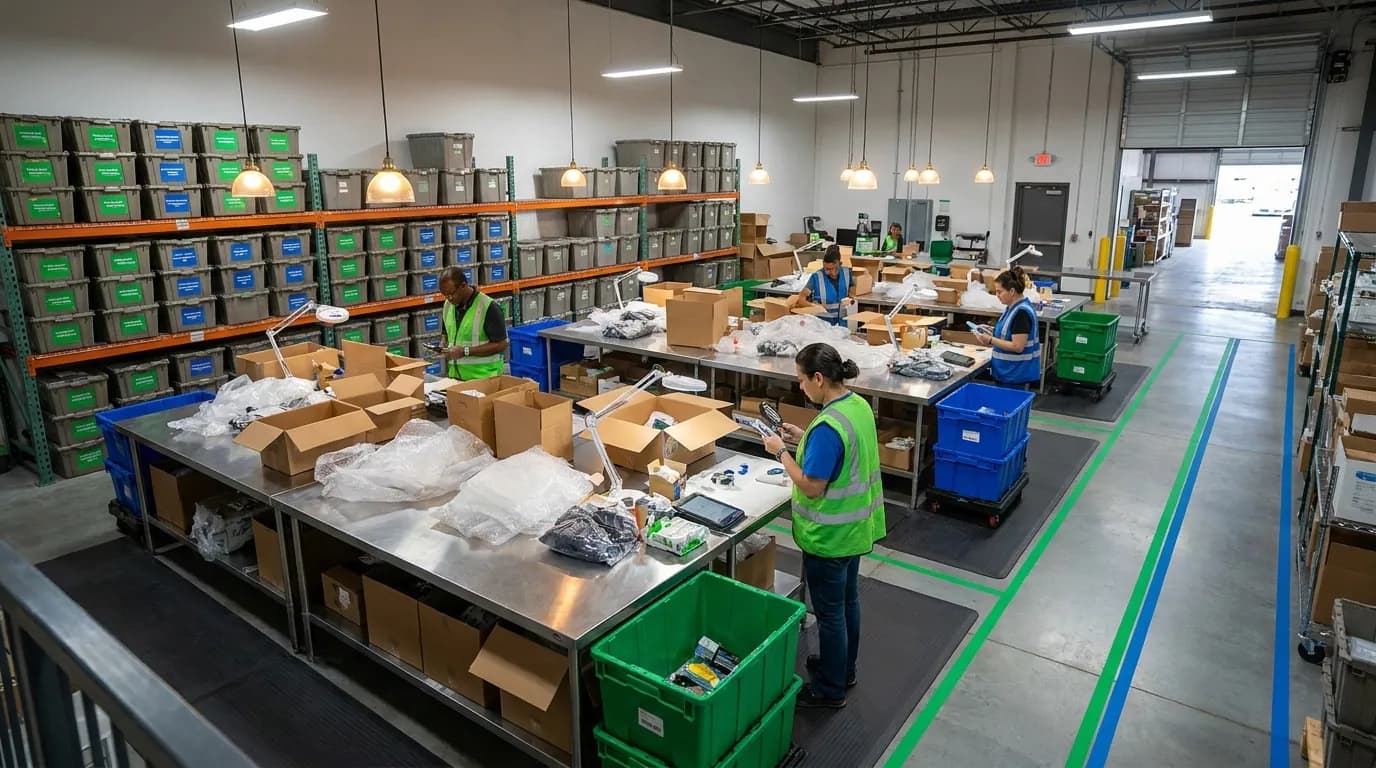
When you hold stock that belongs to someone else, accuracy is more than good practice. Clients, suppliers, and their finance teams rely on your numbers to bill and pay each other. The operational work falls into four pillars, which double as a checklist for reviewing current processes or judging whether your software can handle multi-owner stock. For broader fundamentals, see our warehouse inventory management guide.
Pillar 1: Ownership per Item, Lot, and Location
Every unit needs an owner, not just a SKU. If two owners stock the same part number, the system must keep them apart.
- Owner attribute on every item, lot, serial, and license plate
- Physical or logical segregation between consigned, owned, and other clients' stock
- Receipt date for aging and time-based title triggers
- Status change when title passes to the consignee
A WMS can assign the owner at receipt and enforce it through putaway and picking, so one owner's units never fill another owner's order. Sphere WMS offers multi-client warehousing with inventory segmentation across clients and accurate control of each client's inventory within shared warehouse space.
Pillar 2: Usage and Sell-Through Capture
Usage data turns stock movements into invoices. Miss a consumption event and the settlement statement drifts from reality.
- Each shipment, production issue, or work-order issue against consigned goods
- Quantity, date, lot, and destination per event
- Returns and reversals
- Period-to-date usage per owner
The system should record these transactions by owner as they happen and produce reports that feed billing.
Pillar 3: Replenishment Coordination
The contract should say who restocks. Under a VMI program the supplier decides; otherwise the consignee does. Either way, the warehouse provides the data:
- Agreed reorder points per SKU and owner
- On-hand and in-transit quantities
- Consumption trends for the vendor's planning
- Inbound appointments and ASNs
Good software flags items below agreed levels and shares on-hand figures with suppliers on a set schedule.
Pillar 4: Periodic Reconciliation and Liability
Even clean transactions drift over time. Regular reconciliation keeps each owner's records trustworthy and settles liability before it turns into a dispute.
- Cycle counts by owner, prioritizing high-value, fast-moving consigned SKUs
- Inventory audits at contract-defined intervals
- Variances, shrinkage, and damage, with the liable party noted
- Adjustments with reason codes and approvals
If your 3PL performs kitting, relabeling, or other value-added services on consigned goods, record those transformations against the owner so component and finished quantities both reconcile.
How Sphere WMS Supports Multi-Owner Inventory
Every pillar described above rests on one requirement: the system has to keep each owner's stock distinct even while it shares racking, labor, and pick paths with everyone else's goods. That requirement sits at the heart of any shared, multi-owner facility, and it is where your software choice carries the most weight.
The multi-client warehousing capabilities in Sphere WMS are designed for operations that hold goods on behalf of several parties. The platform provides inventory segmentation and management across multiple clients with detailed tracking and reporting, plus accurate control of each client's inventory within shared warehouse space. Operators also get a centralized view of inventory and orders across multiple warehouse locations, and client billing is integrated and automated.
Here is why that matters for consigned stock. Picture a 3PL storing a supplier's spare parts beside a brand's retail goods and its own purchased stock. They sit in the same aisle and may even carry similar descriptions. Without segmentation, a picker could ship a unit belonging to the wrong owner, and the transaction log would no longer show whose product left the building. Segmented records give you ownership per item, a history of every movement, and per-client reports you can share with the supplier when it is time to reconcile.
That foundation also supports the routines built around it. Owner-level counts fit naturally into a cycle counting program, and periodic inventory audits get simpler when balances are already separated by owner. Clear on-hand visibility for every supplier helps you catch low levels before they turn into stock-outs, which is critical when replenishment depends on accurate usage data. For 3PLs, consignment handling can sit alongside the other value-added services offered to clients.
Keep the division of responsibility clear, though. The specific terms of any consignment arrangement, such as the event that transfers title and how often you settle with the supplier, are set by your contracts and internal processes. A WMS records the physical movements those terms depend on; your agreement decides what each movement means financially.
Request a Demo to see multi-owner inventory control in Sphere WMS.
Frequently Asked Questions
Who owns consignment inventory sitting in a warehouse?
The consignor, usually a supplier, manufacturer or brand, keeps legal ownership until a title trigger occurs. The consignee pays only after goods sell or get used, and the warehouse holding the stock typically owns none of it. Because the holder's counts drive invoicing for both sides, every unit should carry an owner attribute by item, lot and location.
When does title pass on consigned stock?
Title passes at whatever event the contract defines, most often a sale to the end customer or an issue to a work order or production line. Some agreements use a time-based trigger, such as a set number of days in stock. With those terms, aged units convert to owned stock automatically, so receipt dates matter as much as quantities.
What is the difference between consignment and vendor managed inventory?
Consignment determines who holds title, while VMI determines who restocks. A VMI program does not automatically mean the supplier owns the goods. A site can hold buyer-owned VMI, consigned stock the buyer reorders itself, or consigned VMI where the supplier both owns and replenishes it, a setup common in MRO storerooms and production line-side bins.
Does the consignee record consigned goods as its own inventory?
No. The consignee records no inventory and no payable until an item is sold or consumed, and only then books the purchase and liability. The consignor keeps the goods on its balance sheet even though they sit in another building, while a 3PL holder records neither and bills only its storage and handling fees. Finance teams and auditors should confirm treatment for specific contracts.
What does a warehouse need to track for consignment stock?
Track four things: ownership per item, lot and location; usage or sell-through events; replenishment data such as reorder points and on-hand quantities; and periodic reconciliation. Each shipment or production issue against consigned goods should be logged with quantity, date, lot and destination. Owner-level cycle counts then confirm that the closing balance on each settlement statement matches what is physically on the shelf.